
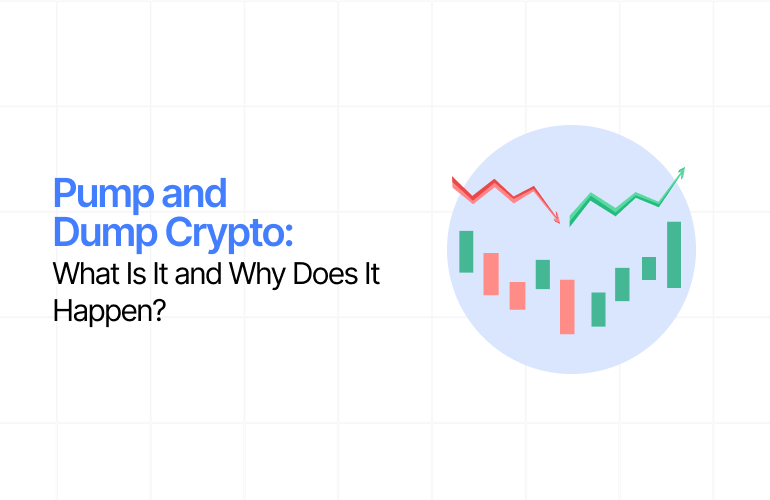
In pump and dump crypto schemes, organised groups or large holders (“whales”) artificially inflate a token’s price to lure in retail buyers. Once the hype reaches a fever pitch, these orchestrators vanish, selling their massive holdings and leaving latecomers with heavy losses.
What Does “Pump and Dump” Mean in Crypto?
To understand the crypto pump and dump meaning, you have to see it as a two-stage act of deception. The “pump” is the buildup. Here, a token’s price is forced upward through heavy promotion and coordinated buy orders. This usually targets tokens with a small market capitalisation (the total value of all coins in circulation), as even modest capital can cause a huge percentage jump.
The “dump” is the exit strategy. When the price hits a target, the organisers liquidate their positions instantly. Because the price was never based on real tech or utility, it crashes once the artificial support is gone.
How Pump and Dump Schemes Work?
A typical pump and dump scheme crypto follows a rigid, predatory lifecycle. It begins with the “accumulation” phase. Here, the bad actors quietly buy a large supply of an obscure token over several days. They do this slowly. If they buy too fast, they risk alerting the market too early.
Next comes the social media blitz. Using Telegram groups or Discord channels, the organisers blast out “signals”. They claim a massive partnership is imminent or that the token is about to hit a major exchange.
Once the public starts buying, the pump accelerates. At the peak, the organisers dump their bags on the very people they just recruited. This sudden flood of sell orders overwhelms the market. The result? The price drops faster than it rose, and the community is left holding severely devalued tokens.
Why Crypto Is Vulnerable to Pump and Dump Schemes
Several factors make the blockchain world a playground for pump and dump in cryptocurrency. Low liquidity is the biggest culprit. In a thin market (where there aren’t many buyers or sellers), a single large trade can move the price by a considerable margin. This makes it incredibly easy for a small group to “paint the tape” and create fake bullishness.
The global, 24/7 nature of crypto also helps. Unlike the Indian stock market, there are no “upper circuits” or “lower circuits” (automated halts in trading during extreme volatility) to stop the bleeding. Bad actors also use the blockchain’s anonymity to hide their tracks.
Common Signs of a Pump and Dump Event
How do you spot the trap before it snaps? Look for a vertical price spike that lacks a corresponding news event. If a token doubles in value but the official project website is silent, be suspicious. High-pressure language from “finfluencers” on X or Telegram is another major red flag.
You should also check the trading volume. A massive surge on a single, low-tier exchange often signals wash trading (a tactic where one person buys and sells to themselves to create fake activity). Avoid projects with anonymous teams or whitepapers that read like marketing brochures. It is likely a setup.
Examples of Pump and Dump Scenarios
In India, we often see “signal groups” gain massive followings on WhatsApp or Telegram. The admin promises a “10x gem” at a specific time. When the clock strikes, they post a token address. Thousands of people buy at once. The price rockets by 300% in seconds.
The problem? The admin bought in hours earlier. By the time you can even type in your trade, they have already hit “sell.” Within five minutes, the price returns to its starting point. The admin deletes the group, and the cycle repeats with a new name.
Impact of Pump and Dump Schemes
The fallout of these schemes is both personal and systemic. For the individual, the losses are usually permanent. Most manipulated tokens never recover their value. This leads to “investor burnout,” where people leave the crypto space entirely because they feel the game is rigged against them.
On a larger scale, these crypto scams hurt the industry’s reputation. When mainstream news reports on these crashes, it makes legitimate projects look like gambles. It also leads to stricter regulations that can stifle actual innovation.
How to Stay Vigilant and Avoid Falling for Scams
Your best defence is a “don’t trust, verify” mindset. Before jumping into a trending token, do your own research. Check the developer activity on GitHub. Look for actual use cases.
Understanding “order book depth” is also vital. If a USD 1,000 sell order would drop the price by 5%, the market is too thin to be safe. By sticking to established, high-liquidity assets, you can avoid the traps that lead to common crypto trading mistakes.
Pump and Dump vs Other Crypto Manipulation Schemes
It is helpful to know that a pump and dump is different from a “Rug Pull” in crypto. In a rug pull, developers themselves drain the liquidity pool, making it impossible for anyone to sell. In a pump and dump, you can still sell, but the price has been hollowed out by the manipulators.
Why Sophisticated Traders Use Pi42
Pi42 is the first crypto-INR perpetual futures (derivative contracts without an expiry date) platform in India. This focus on major assets like Bitcoin and Solana ensures you are trading in deep, liquid markets.
Moreover, the platform offers a distinct tax advantage for the Indian community. By trading futures, users operate under the Business Income (PGBP) framework rather than the flat 30% VDA tax. Benefits include:
- No 1% TDS: Perpetual futures trades on Pi42 do not trigger the transaction-level tax required for spot transfers.
- Offsetting Losses: You can set off your trading losses against gains, a critical feature for long-term sustainability.
- Carrying Forward Losses: Unlike spot trading, this framework allows you to carry forward losses to future financial years.
- High Leverage: Trade with up to 20 times leverage on vetted assets, maximising your capital efficiency without the “garbage coin” risk.