
Many beginners assume cryptocurrency and blockchain are one and the same, and that mix-up breeds confusion once they enter the digital financial world. The two are closely linked, yet they serve very different purposes. Understanding whether cryptocurrencies and blockchain are the same thing matters for any investor working in this space.
What is Blockchain?
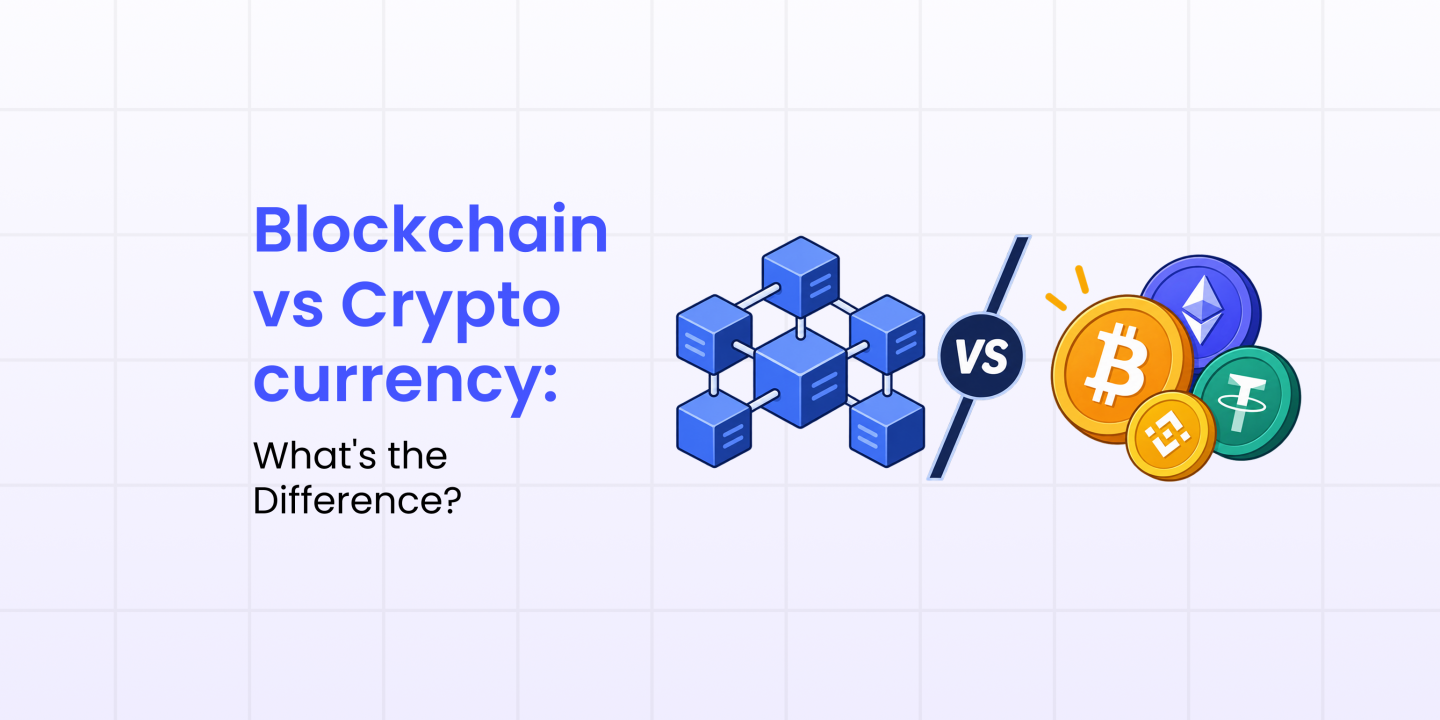
Blockchain is a decentralised digital ledger. It is a record of information spread across a network of computers. That setup keeps data secure, transparent, and immutable. So once recorded, it cannot change. Instead of a central authority, the system groups data into linked blocks spread across the network.
This structure is why blockchain technology reaches beyond digital assets. Supply chain tracking, medical records, and smart contracts, agreements that execute themselves once conditions are met, all run on it.
What is Cryptocurrency?
To grasp what cryptocurrency is, it is a digital medium of exchange. Cryptographic encryption secures each transaction and confirms every transfer of assets. Unlike traditional fiat money, it runs independently of a central bank, with Bitcoin and Ether as familiar examples.
Comparing cryptocurrency vs digital currency issued by central banks, the former depends entirely on decentralised networks. Investors trade these assets for potential profit or hold them as a store of value.
Blockchain vs Cryptocurrency: Key Differences
To determine the blockchain and cryptocurrency difference, look at what each one does. One is a storage and recording technology. The other is an asset that carries monetary value.
Here are the primary distinctions to remember:
- Nature: Blockchain is the underlying network environment, while cryptocurrency is the digital money that operates inside it.
- Utility: The difference between cryptocurrency and blockchain shows up in their use cases: blockchain secures data, and crypto acts as a financial instrument.
- Mobility: Investors can move crypto assets easily through mobile wallets, whereas the ledger stays distributed globally, spread across thousands of nodes, and the network’s participants.
How Blockchain and Cryptocurrency Work Together?
Even with a clear difference between blockchain and crypto, the two remain interdependent. Cryptocurrencies need a secure ledger to record transactions without a central bank, and the decentralised ledger supplies that foundation. Buy a token, and the network locks the transaction into a new block.
This combination has opened the door to innovative trading solutions. Traders searching for an Indian crypto exchange look for platforms built on this secure technology. Pi42 offers a robust ecosystem for crypto-INR perpetual futures trading, letting users navigate these markets safely.
Final Thoughts: Blockchain vs Cryptocurrency
Knowing the distinction between the network and the asset helps investors make informed decisions. The underlying ledger brings security; the digital tokens bring trading opportunities. Traders can put these advances to work on Pi42.
By offering zero TDS, tax deducted at source, and lower taxation instead of the flat thirty per cent VDA, virtual digital asset, tax, Pi42 sets a new standard. Users can set off losses while making use of leverage up to 150x. Start exploring crypto-INR perpetual futures securely today.
FAQs
1. Can blockchain exist without cryptocurrency?
Yes. Blockchain technology can be used independently for applications such as supply chain management, healthcare, digital identity, and document verification. Cryptocurrency is just one of the many use cases built on blockchain.
2. Does every cryptocurrency use blockchain technology?
Most cryptocurrencies use blockchain as their underlying technology, but not all digital assets operate on traditional blockchains. Some newer projects use alternative distributed ledger technologies designed for specific use cases.
3. Why is blockchain considered secure?
Blockchain stores data across multiple computers in a decentralised network, making it extremely difficult to alter or tamper with recorded information. Transactions are also verified through consensus mechanisms before being added to the ledger.
4. Can blockchain transactions be reversed?
In most public blockchain networks, confirmed transactions cannot be reversed. This immutability helps maintain transparency and trust but also means users should verify transaction details carefully before sending funds.
5. How does blockchain support cryptocurrency transactions?
Blockchain records every cryptocurrency transaction on a shared digital ledger. It verifies ownership, prevents double spending, and allows participants to transfer digital assets without relying on a central authority.
6. Why should beginners understand the difference between blockchain and cryptocurrency?
Understanding the difference helps beginners recognise that blockchain is the technology powering digital assets, while cryptocurrency is one of its applications. This knowledge makes it easier to understand how the broader crypto ecosystem works.

Sarvesh Pandey is a growth marketing professional at pi42, where he leads digital acquisition, partnerships, and user growth initiatives in India’s evolving crypto ecosystem. With experience across fintech, EdTech, and consumer internet brands, he shares insights on crypto adoption, trading trends, and performance-led growth strategies.
- Big Loot September: Trade & Win a BMW Bike 🏍️
 Big Loot September is Pi42’s biggest reward drop of the… Read more: Big Loot September: Trade & Win a BMW Bike 🏍️
 - Pi42 Week of Wins: Trade & Win a New iPhone This September
 Pi42 Week of Wins is a September contest where every… Read more: Pi42 Week of Wins: Trade & Win a New iPhone This September
 - Chandi Utsav: Refer and Win Silver Coin
 This September, turn your referrals into something worth its weight!… Read more: Chandi Utsav: Refer and Win Silver Coin
 - Booked by Pi42: Amsterdam Awaits — Trade More, Travel More ✈️
 Booked by Pi42 is a trading contest that could send… Read more: Booked by Pi42: Amsterdam Awaits — Trade More, Travel More ✈️
 - Pi42 Bandhan Bonus: Win Amazon Gift Vouchers This Rakhi
 Pi42 Bandhan Bonus is a Rakhi referral contest where you… Read more: Pi42 Bandhan Bonus: Win Amazon Gift Vouchers This Rakhi