
Crypto markets give traders two broad routes to execute an order. One runs through a company that holds funds and matches trades. The other runs entirely on code. Understanding what is DEX in crypto helps a trader decide which route suits their strategy, their risk appetite and the regulatory environment they operate within.
What is a Decentralized Exchange?
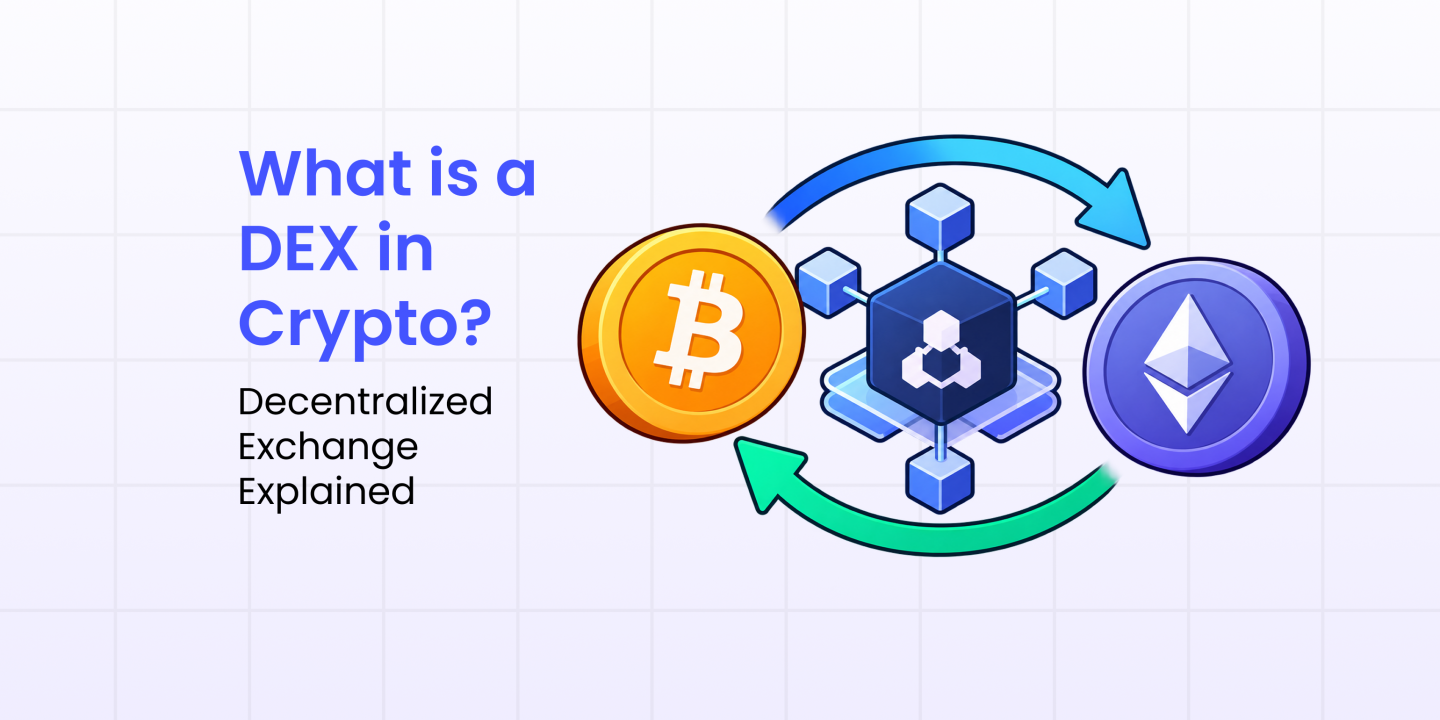
A decentralized exchange, or DEX, is a peer-to-peer marketplace where smart contracts (self-executing code stored on a blockchain) settle trades directly between wallets. No company takes custody of the funds. Anyone wondering what does DEX mean in crypto can picture an exchange engine that operates without an exchange operator standing in the middle of every transaction.
How Does a DEX Work?
Most decentralized exchanges price assets algorithmically instead of matching buyers with sellers through an order book. Traders swap against pooled reserves supplied by liquidity providers, who earn a share of the fees. Readers new to this pricing model can study What is AMM in Crypto for the underlying mathematics.
A typical swap follows six steps:
- The trader connects a self-custody wallet.
- The trader selects the crypto trading pairs to be swapped.
- The interface returns a quote, network fee and slippage estimate.
- The trader reviews the route and token contract address.
- The trader signs the transaction.
- The smart contract settles the trade on-chain.
Liquidity remains scattered across dozens of blockchains, so traders frequently move assets between networks before executing. What is Bridging in Crypto covers that process in detail.
Benefits and Risks of Using a DEX
A DEX removes custodial dependence, yet it hands the entire operational burden to the trader.
The main advantages are as follows:
- Assets stay in the trader’s own wallet until a transaction is signed.
- Listings are permissionless, so new tokens appear early.
- Settlement is transparent and verifiable on-chain.
The main risks are equally clear:
- Smart contract bugs can drain a pool despite audits.
- A lost seed phrase (the master key to a wallet) is unrecoverable.
- Fake tokens and copied tickers circulate freely.
- Thin liquidity produces heavy slippage on larger orders.
Anyone researching “What are the best decentralized exchanges?” should compare depth on the specific pair, audit history and realistic execution cost rather than headline volume alone.
The Way Ahead for Indian Traders
Most DEXs settle only in crypto, offering no direct route into rupees. That gap matters in India, where traders need clean records and a straightforward exit into fiat. The practical question is therefore not whether decentralized trading works, but whether a given venue matches the trader’s goals, settlement currency and compliance needs in India.
Pi42 addresses that gap as a crypto exchange platform built for INR perpetual futures. It offers rupee deposits, INR-settled contracts on pairs such as Bitcoin, Ether, Solana and Ripple, and leverage of up to 20 times.
Leverage magnifies losses as sharply as gains, so position sizing deserves care. Traders should also confirm their tax position with a qualified professional before scaling up.
FAQs About DEX in Crypto
1) What does DEX mean in crypto?
DEX stands for Decentralized Exchange. It allows users to trade crypto directly through blockchain-based smart contracts without relying on a central company to hold their funds.
2) How does a decentralized exchange work?
A DEX uses smart contracts and liquidity pools to execute and settle trades on the blockchain. Users connect their wallets and approve transactions themselves.
3) Is it safe to use a DEX?
DEXs can offer greater control over your funds, but they also carry risks such as smart contract bugs, fake tokens, and high slippage. Users need to verify tokens and understand the risks before trading.
4) Do you need an account to trade on a DEX?
Usually, you don’t need to create a traditional account. You can generally connect a self-custody crypto wallet and approve transactions directly.
5) What are the main benefits of using a DEX?
DEXs allow users to retain custody of their assets, provide transparent on-chain settlement, and often offer access to newly listed tokens.
6) Can Indian traders use DEXs?
Indian traders may access DEXs, but they should consider factors such as crypto-to-INR conversion, transaction records, taxation, and applicable regulations before trading.

Sarvesh Pandey is a growth marketing professional at pi42, where he leads digital acquisition, partnerships, and user growth initiatives in India’s evolving crypto ecosystem. With experience across fintech, EdTech, and consumer internet brands, he shares insights on crypto adoption, trading trends, and performance-led growth strategies.
- Big Loot September: Trade & Win a BMW Bike 🏍️
 Big Loot September is Pi42’s biggest reward drop of the… Read more: Big Loot September: Trade & Win a BMW Bike 🏍️
 - Pi42 Week of Wins: Trade & Win a New iPhone This September
 Pi42 Week of Wins is a September contest where every… Read more: Pi42 Week of Wins: Trade & Win a New iPhone This September
 - Chandi Utsav: Refer and Win Silver Coin
 This September, turn your referrals into something worth its weight!… Read more: Chandi Utsav: Refer and Win Silver Coin
 - Booked by Pi42: Amsterdam Awaits — Trade More, Travel More ✈️
 Booked by Pi42 is a trading contest that could send… Read more: Booked by Pi42: Amsterdam Awaits — Trade More, Travel More ✈️
 - Pi42 Bandhan Bonus: Win Amazon Gift Vouchers This Rakhi
 Pi42 Bandhan Bonus is a Rakhi referral contest where you… Read more: Pi42 Bandhan Bonus: Win Amazon Gift Vouchers This Rakhi