

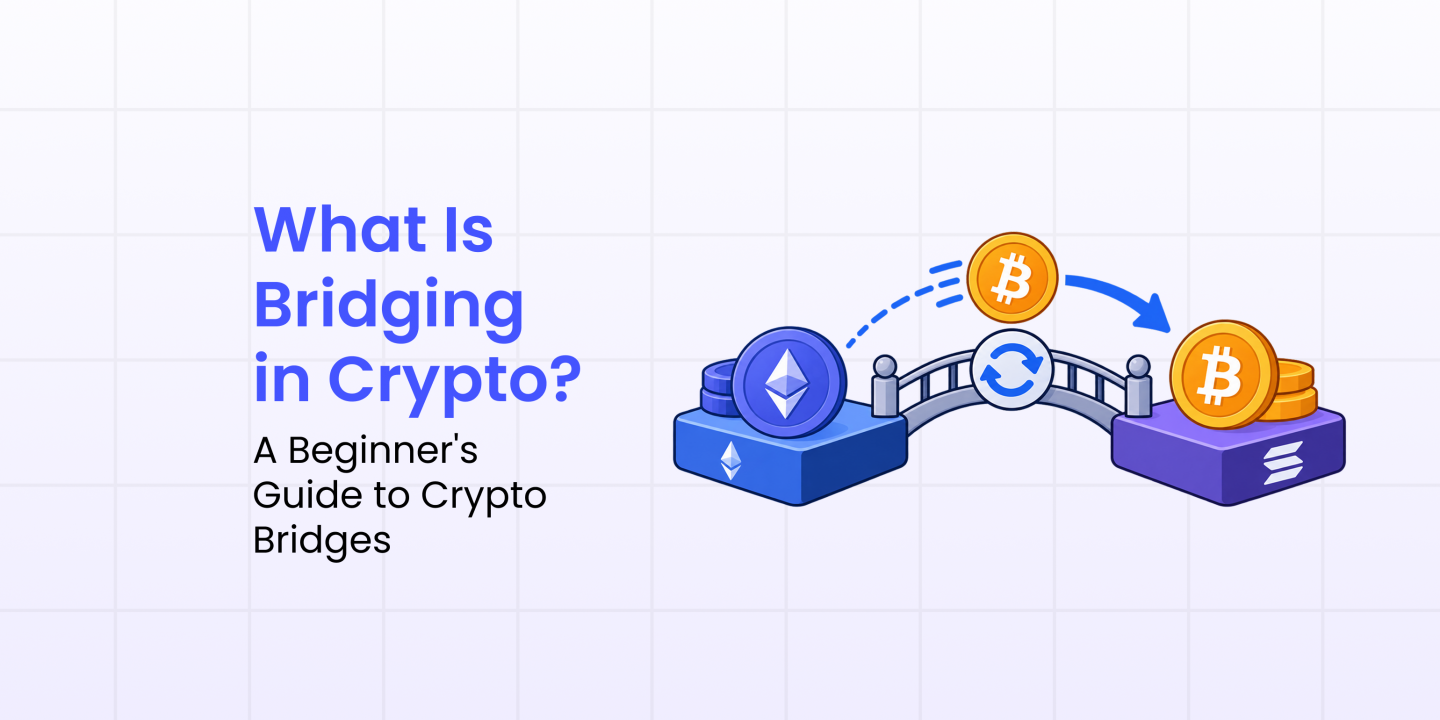
Blockchains do not naturally talk to each other. A token sitting on Ethereum cannot move to Solana by itself because the two networks follow completely separate rules. Bridging solves that gap. In simple terms, what bridging in crypto comes down to is this: moving assets or data from one blockchain to another and linking ecosystems that would otherwise stay walled off.
If you are still learning crypto trading for beginners, getting comfortable with bridges opens access to far more chains than any single network allows.
How Does Bridging in Crypto Work?
A crypto bridge locks your asset on the source chain, then issues a matching “wrapped” version on the chain you want to reach. Your original token stays put. It sits in reserve while its stand-in, worth the same amount, becomes usable elsewhere.
Reverse the transfer and the wrapped token gets burnt, releasing the original. That lock-and-mint cycle keeps total supply steady across both networks.
Types of Crypto Bridges
Bridges do not all work alike, and knowing what crypto bridges are in practice helps you pick sensibly. Most fall into two groups:
- Trusted (centralised) bridges: A company or operator handles the transfer. Faster and simpler, but you are trusting that intermediary.
- Trustless (decentralised) bridges: Smart contracts do the work, with no middleman involved. Here, safety rests on the underlying blockchain technology rather than on one authority.
Grasping what a bridge in crypto across both models lets you balance convenience against control.
Benefits and Risks of Crypto Bridges
Bridging in crypto brings clear upsides, though the downsides deserve equal attention before you move anything.
- Benefits: Deeper liquidity, entry into several ecosystems, cheaper fees on some chains, and freedom to use decentralised apps wherever you like.
- Risks: Smart contract flaws, hacks, and dependence on third parties within trusted setups.
Because a crypto bridge can be a target for exploits, checking crypto bridge security beforehand always pays off.
Trade with Confidence
Bridges hold the multi-chain world together, letting value travel where it was once stuck. Learn how they work, and you trade with far more flexibility across networks that used to feel out of reach.
That same spirit of access drives Pi42, India’s first crypto-INR perpetual futures platform. Once the fundamentals click, we give you a secure, regulated space to put that knowledge to work and trade with confidence.
FAQ – Bridging in Crypto
1. Why do I need a crypto bridge?
A crypto bridge allows you to move assets between different blockchains, giving you access to more decentralized applications, tokens, and trading opportunities.
2. Is bridging crypto safe?
Bridging can be safe when using reputable platforms, but risks such as smart contract vulnerabilities and bridge hacks still exist. Always verify the bridge before transferring funds.
3. How long does a crypto bridge transaction take?
Transaction times vary depending on the bridge and blockchain networks involved. Some transfers take a few minutes, while others may take longer during network congestion.
4. Do I have to pay fees when bridging crypto?
Yes. Most bridges charge network fees and sometimes an additional service fee for transferring assets between blockchains.
5. What happens if a bridge transaction fails?
Failed transactions may result in delayed transfers or refunded assets, depending on the bridge protocol. Always check the platform’s support process before using a bridge.
6. Can I bridge any cryptocurrency between blockchains?
No. Bridges only support specific tokens and blockchain networks. You should confirm compatibility before initiating a transfer.
7. What should I check before using a crypto bridge?
Review the bridge’s security record, supported networks, transaction fees, and liquidity levels to ensure a smooth and secure transfer experience.

Sarvesh Pandey is a growth marketing professional at pi42, where he leads digital acquisition, partnerships, and user growth initiatives in India’s evolving crypto ecosystem. With experience across fintech, EdTech, and consumer internet brands, he shares insights on crypto adoption, trading trends, and performance-led growth strategies.
- Pi42 Snap Fiesta: Refer and Win an Instax Camera This October 📸
 Pi42 Snap Fiesta is an October referral contest that turns… Read more: Pi42 Snap Fiesta: Refer and Win an Instax Camera This October 📸
 - Pi42 BIG TAG: Refer and Win Nothing Buds This September
 Pi42 BIG TAG is a September referral contest that turns… Read more: Pi42 BIG TAG: Refer and Win Nothing Buds This September
 - Leverage in Crypto Trading: Meaning, Benefits & Risks
 Few tools attract as much attention, or cause as much… Read more: Leverage in Crypto Trading: Meaning, Benefits & Risks
 - Big Loot September: Trade & Win a BMW Bike 🏍️
 Big Loot September is Pi42’s biggest reward drop of the… Read more: Big Loot September: Trade & Win a BMW Bike 🏍️
 - Pi42 Week of Wins: Trade & Win a New iPhone This September
 Pi42 Week of Wins is a September contest where every… Read more: Pi42 Week of Wins: Trade & Win a New iPhone This September