
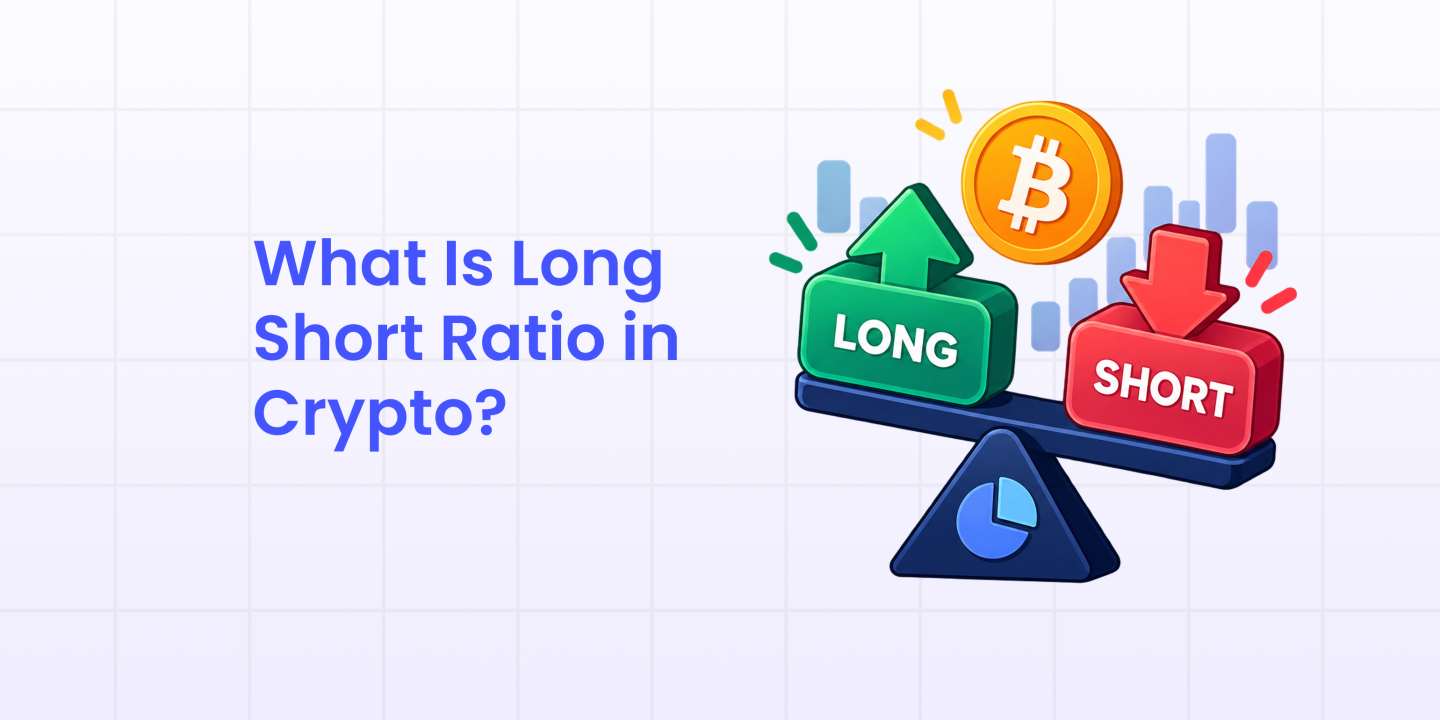
Understanding market sentiment is crucial for consistent financial success. So, exactly what is long short ratio? This important metric compares the number of open long positions to short positions within a specific market. It serves as a highly effective indicator of overall trader sentiment. Analysts frequently use it to gauge whether the broader market leans bullish (optimistic) or bearish (pessimistic) at any given moment.
What are Long and Short Positions in Crypto?
Going long means purchasing an asset expecting its price to rise. Conversely, going short involves borrowing and selling an asset. So, you hope to buy it back at a lower price.
These strategic positions serve as the foundational elements of crypto derivatives (financial contracts deriving their value from an underlying cryptocurrency). Pi42 operates proudly as India’s first crypto-INR perpetual futures trading platform, allowing individuals to take these market positions with absolute ease.
Here are some of the core benefits of using Pi42 for such trades:
- Traders enjoy high leverage options up to 20 times their initial capital.
- Users face zero percent TDS (Tax Deducted at Source) on their executed transactions.
- Investors can legally set off their trading losses against their accumulated gains.
How to Use the Crypto Long-Short Ratio?
A high long/short ratio crypto indicates that the vast majority of traders currently expect prices to increase. This specific scenario often reflects widespread bullish sentiment across the entire digital asset ecosystem. Conversely, a low crypto long-short ratio suggests that market participants are predominantly bearish.
Analysing the crypto long and short ratio represents a highly valuable practice in crypto trading for beginners. It provides a rapid, quantifiable snapshot of current market psychology. Savvy investors will occasionally use a heavily skewed ratio as a contrarian indicator (a signal to trade against the majority). If everyone is overwhelmingly long, a sudden downward price drop could easily trigger a massive cascade of liquidations (forced closure of open positions).
Limitations of the Long/Short Ratio
While useful, this metric has distinct functional boundaries. The crypto short-long ratio does not account for the exact financial size of individual open positions. Ten retail traders holding small long positions could easily be outweighed by a single institutional trader managing a massive short position.
Therefore, relying solely upon the long-short crypto ratio remains a risky practice. It remains best practice to combine this sentiment indicator with thorough technical analysis and deep fundamental research. Market dynamics shift rapidly without warning, and isolated data points rarely tell the entire financial story for any asset.
Final Thoughts
As traders systematically apply these critical insights, choosing the proper trading environment becomes equally important to executing their overall financial strategy.
Many professionals consider Pi42 the best crypto trading platform in India due to its highly unique structural advantages. Users benefit greatly from the complete absence of the standard 30 per cent VDA (Virtual Digital Asset) taxes. By leveraging these distinct platform benefits and utilising sentiment metrics wisely, traders can navigate volatile crypto markets confidently.
FAQs
1. What is considered a good long/short ratio in crypto?
There is no ideal long/short ratio, as it varies across cryptocurrencies and market conditions. Traders generally compare the current ratio with historical data to determine whether market sentiment is unusually bullish or bearish.
2. Can the long short ratio predict market reversals?
The long short ratio can sometimes indicate potential reversals when it reaches extreme levels. However, it should be used alongside technical indicators, price action, and trading volume rather than as a standalone signal.
3. Which traders benefit most from the long short ratio?
Day traders, swing traders, and futures traders commonly use the long short ratio to assess market sentiment before entering or exiting trades. It helps them understand how other market participants are positioned.
4. How often does the long short ratio change?
The long short ratio changes continuously as traders open and close positions. During periods of high market volatility, the ratio can shift significantly within a short time.
5. Does every crypto exchange show the same long short ratio?
No. Each exchange calculates the ratio using its own trading data, so the values may differ across platforms. Traders often compare ratios from multiple exchanges to get a broader view of market sentiment.
6. What indicators should be used along with the long short ratio?
The long short ratio is often combined with indicators such as Open Interest, funding rates, RSI, MACD, trading volume, and support and resistance levels to improve trading decisions and confirm market trends.

Sarvesh Pandey is a growth marketing professional at pi42, where he leads digital acquisition, partnerships, and user growth initiatives in India’s evolving crypto ecosystem. With experience across fintech, EdTech, and consumer internet brands, he shares insights on crypto adoption, trading trends, and performance-led growth strategies.
- Pi42 Head to Trade: Trade & Win the Season’s Biggest Prizes 🎮
 Pi42 Head to Trade is a festive-season trading contest where… Read more: Pi42 Head to Trade: Trade & Win the Season’s Biggest Prizes 🎮
 - Pi42 Snap Fiesta: Refer and Win an Instax Camera This October 📸
 Pi42 Snap Fiesta is an October referral contest that turns… Read more: Pi42 Snap Fiesta: Refer and Win an Instax Camera This October 📸
 - Pi42 BIG TAG: Refer and Win Nothing Buds This September
 Pi42 BIG TAG is a September referral contest that turns… Read more: Pi42 BIG TAG: Refer and Win Nothing Buds This September
 - Leverage in Crypto Trading: Meaning, Benefits & Risks
 Few tools attract as much attention, or cause as much… Read more: Leverage in Crypto Trading: Meaning, Benefits & Risks
 - Big Loot September: Trade & Win a BMW Bike 🏍️
 Big Loot September is Pi42’s biggest reward drop of the… Read more: Big Loot September: Trade & Win a BMW Bike 🏍️