
Key Takeaways:
RSI works best when used alongside proper market analysis and risk management.
What is RSI indicator? It is a momentum oscillator used to measure price strength and market momentum.
RSI helps traders identify overbought and oversold conditions in crypto markets.
Traders often combine RSI with indicators like MACD and Moving Averages for stronger confirmation.

The Relative Strength Index (RSI) is a momentum oscillator that measures the speed and magnitude of price movements. Developed by J. Welles Wilder, this technical analysis tool helps traders identify whether a crypto asset is overbought or oversold, making it a valuable tool for decision-making.
For traders learning what is RSI in crypto trading, RSI is widely used to evaluate momentum shifts and identify possible market reversals.
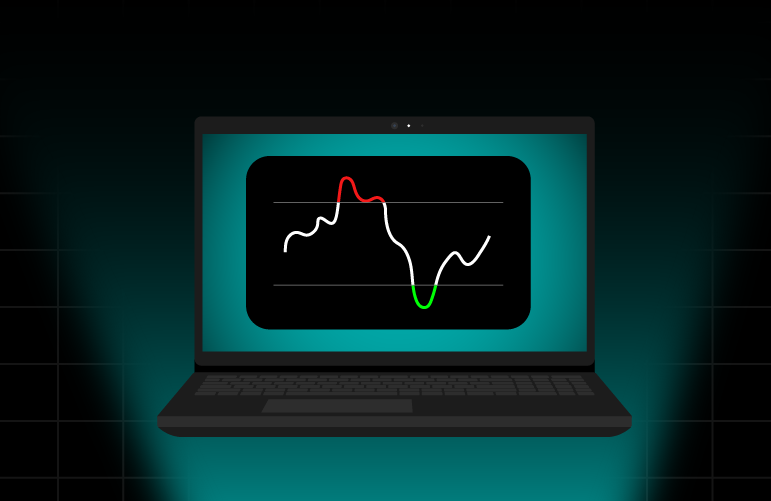
The RSI ranges from 0 to 100 and is typically set to a 14-period timeframe. When the RSI value is above 70, the asset is considered overbought, indicating a potential price correction.
Conversely, when the RSI is below 30, the asset is considered oversold, signalling a possible buying opportunity.
Understanding these RSI levels helps traders make more informed decisions by highlighting potential market reversals. In the next section, we’ll dive into how RSI is calculated and applied in real-world crypto trading scenarios.
How Does the RSI Indicator Work in Crypto Trading?
The RSI is calculated using the following formula:
RSI=100−(1001+RS)RSI = 100 – \left( \frac{100}{1 + RS} \right)RSI=100−(1+RS100)
where RS (Relative Strength) is the ratio of average gains to average losses over a defined period (usually 14 days).
The RSI provides insights into market momentum and can help traders make more informed decisions.
Crypto traders use RSI to:
- Identify trend strength and reversals.
- Spot overbought and oversold conditions.
- Confirm entry and exit points in trades.
- Analyze bullish and bearish divergences.
How to Interpret RSI Values in Crypto Trading
What Does a High RSI Mean?
A high RSI (above 70) indicates strong bullish momentum.
It may signal overbought conditions, but traders should confirm using other indicators before selling.
RSI above 80 is sometimes considered extremely overbought, suggesting a stronger likelihood of price correction. However, such thresholds can vary depending on trading strategies and market conditions.
Understanding what does RSI mean in crypto becomes important when evaluating whether prices may reverse after strong momentum.
What Does a Low RSI Mean?
A low RSI (below 30) suggests strong bearish momentum.
It may indicate an oversold condition, but traders should look for confirmation before buying.
RSI below 20 is considered extremely oversold, signalling a high probability of a price reversal.
What is an RSI Buy Signal?
When RSI moves above 30 from oversold levels, it can be a buy signal.
RSI divergence (when price moves lower but RSI moves higher) is another bullish reversal signal.
Traders often combine RSI with support and resistance levels for more accurate entry points.

How to Use RSI for Crypto Trading
Combining RSI with Other Indicators
The RSI alone may not be sufficient to make trading decisions. Combining it with other indicators enhances accuracy:
- Moving Averages (MA) – RSI with 50-day or 200-day MA helps confirm trends.
- MACD (Moving Average Convergence Divergence) – A bullish MACD crossover with a rising RSI strengthens a buy signal.
- Bollinger Bands – Helps identify volatility alongside RSI levels.
- Volume Analysis – Higher volume near RSI reversal points increases reliability.
Many traders using the Relative Strength Index Indicator rely on confirmation signals before entering trades.
How to Avoid False RSI Signals
RSI is most effective in range-bound markets, where prices fluctuate between support and resistance levels.
In strong trending markets, RSI can remain overbought or oversold for extended periods, potentially leading to false signals.
- Look for RSI divergence to confirm trend reversals.
- Avoid trading solely based on RSI—always confirm signals with other indicators.
Customizing RSI Settings for Different Trading Styles
Short-Term Traders:
Use RSI 7-10 periods for faster, more responsive signals.
Swing Traders:
Default 14-period RSI is effective for mid-term trades.
Long-Term Investors:
Use RSI 21-30 periods for more stable signals and reduced noise.
This flexibility is one reason the rsi indicator cryptocurrency traders use remains effective across different trading styles.
Mistakes to Avoid While Using RSI Indicator
- Relying only on RSI for trade decisions – Always confirm with price action and volume.
- Ignoring overall market trends – RSI signals work best when aligned with the broader trend.
- Overtrading based on RSI alone – False signals can lead to unnecessary trades.
By being mindful of these common pitfalls, traders can avoid costly errors and use the RSI indicator more effectively in their crypto strategies.
Conclusion: What Is the RSI Indicator?
The RSI indicator is a fundamental tool for crypto traders, helping identify overbought and oversold conditions while predicting potential trend reversals.
However, RSI should be used in combination with other indicators for more reliable results.
Platforms like Pi42, India’s first Crypto-INR perpetual futures trading platform, provide traders with the perfect environment for executing RSI-based trading strategies while benefiting from no 1% TDS, no 30% flat tax, and up to 150x leverage.
By mastering RSI interpretation and integrating it with other technical tools, traders can enhance their decision-making and improve their trading success in the volatile crypto market.
Understanding what is RSI indicator and applying it correctly can help traders improve timing, identify trend reversals, and strengthen overall trading strategies.
FAQs About RSI in Crypto Trading
1) What is RSI indicator in crypto trading?
RSI indicator is a momentum-based technical analysis tool that measures the speed and strength of price movements in crypto markets.
2) What is RSI in crypto?
RSI in crypto refers to the Relative Strength Index, which helps traders identify overbought and oversold market conditions.
3) What does RSI mean in crypto trading?
RSI means Relative Strength Index, a technical indicator used to analyze momentum and potential trend reversals in cryptocurrency trading.
4) What is RSI in cryptocurrency used for?
RSI in cryptocurrency is used to identify entry and exit points, trend strength, and possible market reversals.
5) Why is the Relative Strength Index Indicator important?
The Relative Strength Index Indicator helps traders make better decisions by measuring momentum and spotting potential buying or selling opportunities.
You Might Also Like
Understanding Long and Short Positions in Crypto Trading
How to Trade with Fibonacci Retracement in Crypto
Scalping in crypto futures

Sarvesh Pandey is a growth marketing professional at pi42, where he leads digital acquisition, partnerships, and user growth initiatives in India’s evolving crypto ecosystem. With experience across fintech, EdTech, and consumer internet brands, he shares insights on crypto adoption, trading trends, and performance-led growth strategies.
- Pi42 Snap Fiesta: Refer and Win an Instax Camera This October 📸
 Pi42 Snap Fiesta is an October referral contest that turns… Read more: Pi42 Snap Fiesta: Refer and Win an Instax Camera This October 📸
 - Pi42 BIG TAG: Refer and Win Nothing Buds This September
 Pi42 BIG TAG is a September referral contest that turns… Read more: Pi42 BIG TAG: Refer and Win Nothing Buds This September
 - Leverage in Crypto Trading: Meaning, Benefits & Risks
 Few tools attract as much attention, or cause as much… Read more: Leverage in Crypto Trading: Meaning, Benefits & Risks
 - Big Loot September: Trade & Win a BMW Bike 🏍️
 Big Loot September is Pi42’s biggest reward drop of the… Read more: Big Loot September: Trade & Win a BMW Bike 🏍️
 - Pi42 Week of Wins: Trade & Win a New iPhone This September
 Pi42 Week of Wins is a September contest where every… Read more: Pi42 Week of Wins: Trade & Win a New iPhone This September