
The volatile cryptocurrency market rewards strategy over simple buy-and-hold. Plenty of investors want steady returns without betting on direction. One approach exploits how perpetual futures contracts work.
What is Funding Rate Arbitrage in Crypto?
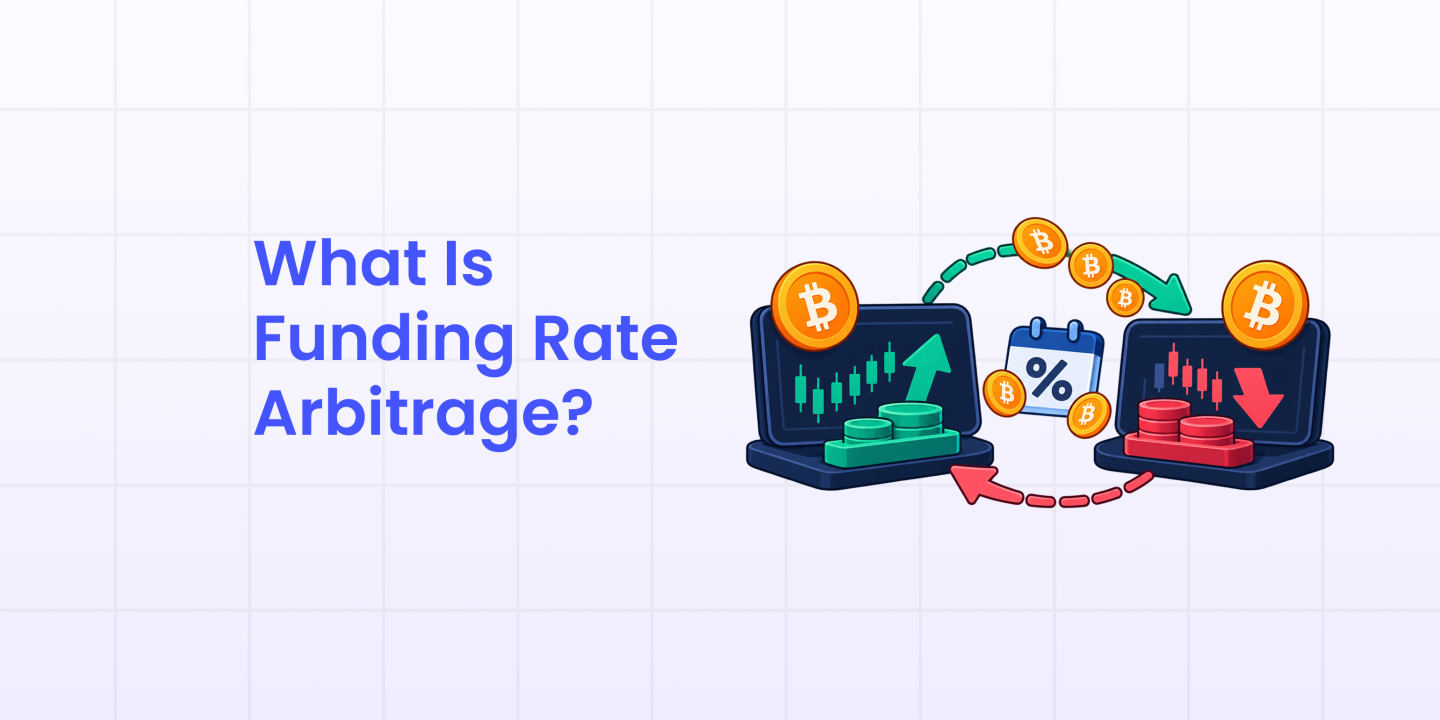
It hinges on how perpetual contracts behave inside crypto derivatives. These instruments never expire, so platforms apply a funding rate mechanism that keeps the contract price tied to the spot market. A trader running crypto funding rate arbitrage holds two equal, opposing positions at once: buying the actual asset while selling a perpetual futures contract of identical size on a crypto exchange platform.
That cancels directional price exposure. The trader then profits purely from payments collected at set intervals. Funding rate arbitrage crypto strategies turn these routine payouts into a reliable yield. Balanced positions mean general volatility stops mattering.
How Does Funding Rate Arbitrage Work?
The mechanics lean on the gap between spot and futures prices. When buyers dominate, the funding rate turns positive, and long holders pay short holders. A trader buys the physical token and opens a short through contract trading.
The sequence usually looks like this:
- Find a perpetual contract with a persistently high funding premium.
- Buy a chosen notional value, meaning the total dollar amount, of the asset.
- Open a short perpetual position for that same amount.
- Collect funding payments while the rate stays favourable.
Because spot and futures match, a sudden price drop gets offset by the short. The trader keeps pocketing the premium. Watch fees closely since they can eat the profit and monitor positions.
Benefits and Risks of Funding Rate Arbitrage
This market-neutral strategy has real appeal. It produces passive income regardless of where the market heads. On a compliant exchange like Pi42, traders also see zero Tax Deducted at Source (TDS) and skip the thirty per cent Virtual Digital Asset (VDA) tax. The risks deserve equal attention. A rate flip can turn you from collector to payer overnight. Basis risk, where spot and futures prices drift apart, chips away at planned profit. And a sharp crash may trigger crypto liquidation if margin on the leveraged futures leg runs thin.
Funding Rate Arbitrage vs Hedging
Hedging shields a portfolio you already hold from a possible drop. You own the asset first, then short futures to lock in its current value. The spot position clearly comes before the decision to hedge.
Arbitrage is different. You open both positions together to harvest funding premiums. The goal is yield, not protection.
Summary
Learning to extract value from funding rates gives you an edge in digital asset markets. This delta-neutral technique turns ordinary market mechanics into a workable yield tool. Indian investors get more from it by picking a platform built for their regulatory reality.
Pi42 ranks as India’s leading crypto-INR perpetual futures platform. It offers smooth trading with leverage up to 150x, plus the set-off of accumulated losses. Users can run advanced futures strategies securely while keeping capital efficient.
FAQs
1. Is funding rate arbitrage suitable for beginners?
Funding rate arbitrage is generally better suited for traders who understand perpetual futures, margin requirements, and risk management. Beginners should first learn how funding rates and leveraged positions work before attempting this strategy.
2. How long can a funding rate arbitrage trade remain open?
A trade can stay open as long as the funding rate remains favourable and the trader maintains sufficient margin. Many traders monitor funding rates regularly and close their positions if the expected returns decline.
3. Does funding rate arbitrage guarantee profits?
No. While the strategy aims to reduce price risk by holding offsetting positions, profits depend on funding rates staying positive, trading costs remaining low, and effective margin management. Market conditions can change unexpectedly.
4. Can funding rate arbitrage be used with any cryptocurrency?
Not always. The strategy works best for cryptocurrencies with liquid perpetual futures markets and consistent funding rate activity. Assets with low liquidity or irregular funding rates may offer limited opportunities.
5. What should traders check before opening a funding rate arbitrage position?
Traders should review the current funding rate, trading fees, available liquidity, margin requirements, and the historical consistency of funding payments. Evaluating these factors helps determine whether the potential returns justify the trade.
6. How is funding rate arbitrage different from directional trading?
Directional trading depends on correctly predicting whether an asset’s price will rise or fall. Funding rate arbitrage, on the other hand, aims to generate returns from funding payments while minimising exposure to market price movements through offsetting positions.

Sarvesh Pandey is a growth marketing professional at pi42, where he leads digital acquisition, partnerships, and user growth initiatives in India’s evolving crypto ecosystem. With experience across fintech, EdTech, and consumer internet brands, he shares insights on crypto adoption, trading trends, and performance-led growth strategies.
- Big Loot September: Trade & Win a BMW Bike 🏍️
 Big Loot September is Pi42’s biggest reward drop of the… Read more: Big Loot September: Trade & Win a BMW Bike 🏍️
 - Pi42 Week of Wins: Trade & Win a New iPhone This September
 Pi42 Week of Wins is a September contest where every… Read more: Pi42 Week of Wins: Trade & Win a New iPhone This September
 - Chandi Utsav: Refer and Win Silver Coin
 This September, turn your referrals into something worth its weight!… Read more: Chandi Utsav: Refer and Win Silver Coin
 - Booked by Pi42: Amsterdam Awaits — Trade More, Travel More ✈️
 Booked by Pi42 is a trading contest that could send… Read more: Booked by Pi42: Amsterdam Awaits — Trade More, Travel More ✈️
 - Pi42 Bandhan Bonus: Win Amazon Gift Vouchers This Rakhi
 Pi42 Bandhan Bonus is a Rakhi referral contest where you… Read more: Pi42 Bandhan Bonus: Win Amazon Gift Vouchers This Rakhi