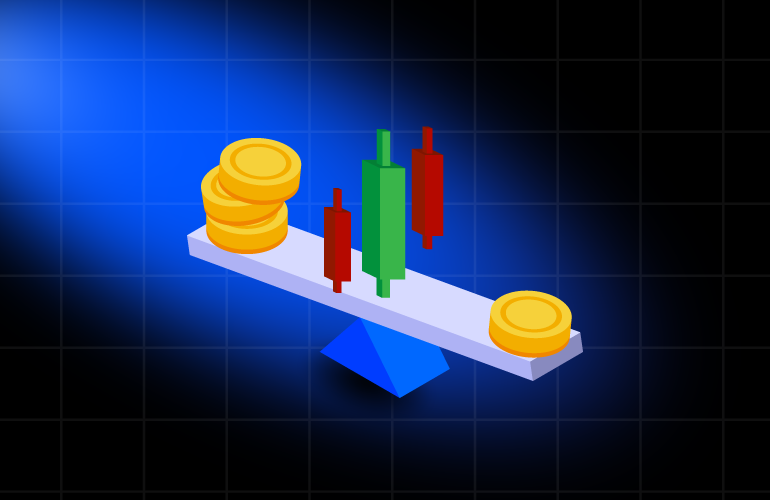
Cross margin vs isolated margin is a crucial concept when trading crypto futures on Pi42. Selecting the right margin mode can significantly impact how you manage risk and capital. Understanding the difference between cross and isolated margin helps you make informed trading decisions and align your strategy with your risk appetite.
Let’s walk through both margin types in simple terms, with clear examples to help you decide which one suits your trading style.
Cross Margin vs Isolated Margin – Key Differences
| Feature | Cross Margin | Isolated Margin |
|---|---|---|
| Margin Usage | Shared across all open positions | Set individually per trade |
| Risk Exposure | Higher — entire balance can be used | Lower — only assigned margin is at risk |
| Profit/Loss Sharing | Profits and losses affect all positions | Limited to each trade |
| Best For | Experienced traders managing multiple positions | Beginners or those focused on risk control |
How Cross Margin Is Different from Isolated Margin
Isolated vs cross margin modes differ in how they manage the margin of your trades. Below is an in-depth comparison.
1. Margin Available to Trade
- Isolated Margin :-
Each position is completely independent and has its own margin allocation. If one of your trades runs into losses, only the margin assigned to that trade is affected. This explains what is isolated margin, where risk is limited to a single position.
Formula :-
Available to Trade (Isolated Margin Mode) = Futures Wallet Balance − Locked Margin − Unrealized Losses*
Example :-
Wallet balance: $1000
Trade 1: BTCUSDT with $200 margin
Available margin: $800
The fact that this trade generates a $100 profit won’t increase available margin for other positions.
- Cross Margin :-
All positions draw on the same margin pool, and profits from one trade can help support others. This defines what is cross margin, where available funds are shared across open positions.
Formula :-
Available to Trade (Cross Margin Mode) = Wallet Balance − Locked Margin + Unrealized Cross P&L*
Example :-
Wallet balance: $ 1000
Trade: BTCUSDT with $ 200 margin and $ 100 profit
Available margin becomes: $ 1000 − $ 200 + $ 100 = $ 900
2. Profits from One Trade Increases Available Funds for Further Trades.
- Isolated Margin :-
The assigned margin for every trade is locked and remains independent. Profits or losses from one position do not affect the margin allocated to other positions.
Example :-
Trade 1: BTCUSDT, $200
Trade 2: ETHUSDT, $100
Total locked margin = $300, but each margin is attached to its trade.
If the BTC trade liquidates, the ETH trade and its rest account remain intact. Then only the 200 margin is lost.
- Cross Margin :-
Cross margin provides more flexible capital management. Profits from one position can support other open trades, For a broader understanding of crypto margin trading, traders can explore how leverage and margin work together in futures trading.
Example :-
BTCUSDT position: $200 margin, $50 profit –
ETHUSDT position: $300 margin, $150 loss –
Total cross margin: $1000 − ($200 + $300) + ($50 − $150) = $400 –
Losses in a single position reduce the remaining margins of all other orders, and risk of liquidation increases.
3. Liquidation
- Isolated Margin :-
Each trade has a separate liquidation price. When the margin allocated to a particular position becomes insufficient, only that position is liquidated. Other trades remain unaffected.
- Cross Margin :-
Liquidation in cross margin is based on the maintenance margin ratio of the overall account. If the total available margin falls below the required threshold, multiple positions may be liquidated.
Equation :-
Cross Margin Ratio = Maintenance Margin / Total Cross Margin
Rule of Thumb:
Smaller cross margin ratio, better and safer the positions are.
100% margin ratio will give liquidation for all open positions.
4. Risks
- Isolated Margin :-
Since every position has its own dedicated margin, losses are restricted to that trade alone. This makes isolated margin suitable for beginners and traders who prefer managing risk on a position-by-position basis.
- Cross Margin :-
Cross margin offers greater flexibility but carries higher overall risk because all positions share the same margin pool. Significant losses in one position can impact the available margin for others, making this mode more suitable for experienced traders managing multiple positions.
Which Mode is Good for Me?
- Isolated Margin
Best for beginners or traders looking to limit risks to individual positions.
Quite helpful in volatile markets as losses incurred by one position will not influence other positions.
Relatively more control over margin and risk management.
- Cross Margin
This mode is recommended to the advanced traders who can well handle multiple trades at a time. It is ideal to use profits from one trade in covering margin on other trades.
Recommended for low-volatility markets to avoid unexpected liquidations.
Cross Margin Trading on Pi42
Use Pi42’s cross margin mode to manage multiple futures positions with greater flexibility. The platform offers real-time P&L tracking, margin adjustments, and leveraged trading tools that allow you to adapt your strategy without rigid margin restrictions.
Additional features include:
Instant INR deposits to fund your futures wallet.
Zero conversion fees when trading in INR.
API Integration for Automated Trading on Pi42
With Pi42’s API integration, you can automate your trading strategies by connecting external platforms or your own trading bots. This is particularly useful for experienced traders running algorithmic or high-frequency trading strategies.
Using APIs, you can efficiently manage positions, automatically select the appropriate margin mode (Isolated or Cross), and respond to market movements without manual intervention. This helps improve execution while giving you greater control over your capital and risk management.
Conclusion
Cross margin vs isolated margin ultimately comes down to flexibility versus risk control. Cross margin provides higher capital efficiency by pooling funds across positions, making it suitable for experienced traders. Isolated margin limits risk to individual positions and is often preferred by beginners or traders navigating volatile market conditions.
Understanding the difference between cross and isolated margin allows you to choose the margin mode that best matches your trading objectives and risk tolerance. With Pi42, you can switch between both modes depending on market conditions, giving you greater flexibility and control over your trading strategy. Choosing the right crypto exchange platform can also help you manage your futures positions and trading strategy more effectively.
FAQs – Cross Margin vs Isolated Margin
1) What is cross margin?
What is cross margin? It is a margin mode where all open positions share the same available margin balance. This allows profitable positions to support losing ones but also increases overall liquidation risk.
2) What is isolated margin?
What is isolated margin? It is a margin mode where each position has its own dedicated margin allocation, ensuring that losses are limited to that specific trade.
3) What is the difference between cross and isolated margin?
The difference between cross and isolated margin is that cross margin shares available funds across all positions, while isolated margin assigns separate margin to each trade, limiting potential losses to individual positions.
4) Is isolated vs cross margin better for beginners?
In isolated vs cross margin, isolated margin is generally considered better for beginners because it offers better risk control and prevents losses in one position from affecting other trades.
5) Is isolated or cross margin which is better?
Isolated or cross margin which is better depends on your trading style. Isolated margin is suitable for traders focused on managing risk per trade, while cross margin is preferred by experienced traders seeking greater capital efficiency across multiple positions.
Disclaimer: Crypto products and NFTs are unregulated and can be highly risky. There may be no regulatory recourse for any loss arising from such transactions.

Sarvesh Pandey is a growth marketing professional at pi42, where he leads digital acquisition, partnerships, and user growth initiatives in India’s evolving crypto ecosystem. With experience across fintech, EdTech, and consumer internet brands, he shares insights on crypto adoption, trading trends, and performance-led growth strategies.
- Pi42 Tick Together: Refer and Win an Armani Watch ⌚
 Pi42 Tick Together is a festive-season referral contest where your… Read more: Pi42 Tick Together: Refer and Win an Armani Watch ⌚
 - Pi42 Delisting: 74 USDT Futures Contracts on 29 October 2026
 As part of our periodic Market Quality Review, Pi42 is… Read more: Pi42 Delisting: 74 USDT Futures Contracts on 29 October 2026
 - Pi42 Head to Trade: Trade & Win the Season’s Biggest Prizes 🎮
 Pi42 Head to Trade is a festive-season trading contest where… Read more: Pi42 Head to Trade: Trade & Win the Season’s Biggest Prizes 🎮
 - Pi42 Snap Fiesta: Refer and Win an Instax Camera This October 📸
 Pi42 Snap Fiesta is an October referral contest that turns… Read more: Pi42 Snap Fiesta: Refer and Win an Instax Camera This October 📸
 - Pi42 BIG TAG: Refer and Win Nothing Buds This September
 Pi42 BIG TAG is a September referral contest that turns… Read more: Pi42 BIG TAG: Refer and Win Nothing Buds This September