
Navigating the digital asset market means filtering through thousands of projects. Understanding what is cryptocurrency lays the groundwork for any serious investor looking to build a resilient portfolio. At their core, these are decentralised digital assets secured by advanced cryptography.
What are the Different Types of Cryptocurrency?
Over the past decade, developers have launched different types of cryptocurrency to tackle highly varied problems across the global economy. Some function purely as digital cash. Others act as the fuel for massive, global computing networks.
Main Categories of Cryptocurrency
To make sense of the noise, analysts typically split the market into different categories of cryptocurrency. This basic division separates the foundational assets from the decentralised applications built directly on top of them.
Coins
They operate on proprietary blockchain networks, maintaining an immutable ledger of transactions. Bitcoin and Ether exemplify this, serving as a medium of exchange, a unit of account, and a long-term store of value. Participants pay fees in these native coins, compensating validators who secure the blockchain, allowing the base layer to run independently.
Tokens
Tokens, on the other hand, borrow their infrastructure. They do not have their own native blockchain.
- Developers build them on existing, established networks (like Ethereum or Solana) using self-executing smart contracts.
- They represent a specific asset, a voting right, or access to a particular decentralised project.
- By leveraging an established network’s security, development teams can deploy token projects rapidly without building an entirely new blockchain.
Types of Cryptocurrencies Based on Use Case
Assessing all types of cryptocurrencies by their actual use case reveals their true market potential.
Payment Cryptocurrencies
These aim to dethrone traditional fiat money for everyday transactions. Payment coins facilitate global, peer-to-peer electronic cash transfers without central banks acting as gatekeepers. Because many feature a hard-capped total supply, investors frequently view them as a deflationary hedge against fiat inflation.
Utility Tokens
Utility tokens provide access to specific products or services within a blockchain ecosystem but do not confer ownership in the company. Users spend these tokens for features like decentralised cloud storage or gaming. Their market value varies significantly based on consumer demand for the platform.
Governance Tokens
Decentralised projects require decision-making without a corporate board, and governance tokens provide a solution. They enable holders to directly influence the protocol’s future, propose changes, adjust fees, and vote on upgrades. Voting power typically scales with the number of tokens held, aligning developers’ financial incentives with the community’s interests.
Stablecoins
Stablecoins address price volatility by pegging their value to a reserve asset, most commonly the US Dollar or physical gold. For active day traders, they are an absolute necessity. They provide a safe haven to park capital during sudden market downturns.
Non-Fungible Tokens
While one Bitcoin is exactly identical to another, Non-Fungible Tokens (NFTs) represent wholly unique digital items. They prove verifiable ownership of digital art, collectibles, or virtual real estate on the blockchain.
Types of Cryptocurrencies Based on Technology
Behind the scenes, the consensus mechanism is what keeps the ledger accurate and secure from attackers. Breaking down different forms of cryptocurrency through their technological infrastructure highlights exactly how these networks handle security versus operational efficiency.
Proof of Work Cryptocurrencies
This is the original model. Proof of work networks rely on a global army of miners competing to solve complex mathematical puzzles. The winner validates the next batch of transactions and appends the new block to the chain. While purists argue this proven method offers the absolute highest level of security and decentralisation, it comes with a steep energy and hardware cost.
Proof of Stake Cryptocurrencies
To solve the scaling and energy issues, many modern networks have transitioned to a proof-of-stake model. Here, the network selects transaction validators based on the number of coins they lock up as collateral in a smart contract. This modern method effectively eliminates the need for energy-hungry mining rigs, vastly reducing the network’s carbon footprint.
Popular Examples of Cryptocurrencies
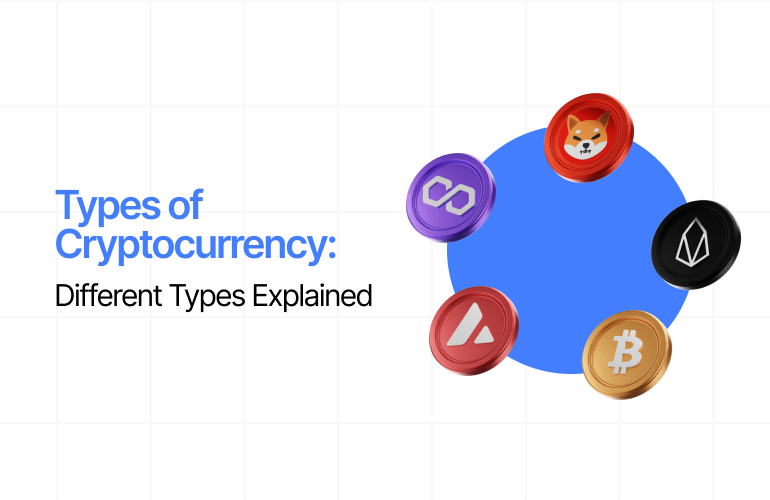
Theory is great, but looking at specific types of crypto grounds these concepts in reality. Bitcoin remains the undisputed heavyweight by market capitalisation, acting as the ultimate secure digital store of value. Ethereum, meanwhile, powers the decentralised finance sector as the leading global platform for smart contracts. When speed is the priority, networks like Solana step in, offering incredibly high-speed transactions and low fees to host highly scalable consumer applications. Then there is Litecoin, which took Bitcoin’s core code and modified the hashing algorithm to drastically speed up confirmation times for everyday micro-transactions.
How to Choose Between Different Types of Crypto
Throwing capital at random tokens is a fast track to liquidation. Selecting the right digital assets requires an objective look at long-term goals and an understanding of how these assets fundamentally differ from traditional finance.
For traders making the leap, examining the broader Stock Market vs Cryptocurrency landscape is vital for setting realistic expectations. Traditional equities are judged on quarterly earnings, physical assets, and corporate cash flows. Digital assets? They require investors to critically evaluate network tokenomics, active wallet addresses, and the total addressable market of a decentralised project.
Advantages and Limitations of Different Crypto Types
No single asset does it all. Payment coins offer incredible financial sovereignty, but often struggle with slow confirmation speeds during network congestion. Utility tokens grant early access to highly innovative protocols, yet their entire value depends on the commercial survival of one specific platform.
For Indian traders navigating this complex terrain, execution is everything. Platforms like Pi42 provide a strictly regulated, highly efficient environment to capitalise on these diverse assets. By offering crypto-INR perpetual futures, Pi42 allows traders to aggressively speculate on price movements using advanced, institutional-grade tools.
The Bottom Line
Grasping the fundamental differences between various types of cryptocurrency is not just academic trivia; it is a mandatory survival skill for modern traders. Recognising the strict structural distinction between a foundational coin and a speculative token allows investors to accurately gauge their exposure. Whether you trade through an Indian crypto exchange or another platform, trade wisely, stay updated, and ensure you understand exactly which asset category you hold.

Sarvesh Pandey is a growth marketing professional at pi42, where he leads digital acquisition, partnerships, and user growth initiatives in India’s evolving crypto ecosystem. With experience across fintech, EdTech, and consumer internet brands, he shares insights on crypto adoption, trading trends, and performance-led growth strategies.
- Pi42 Tick Together: Refer and Win an Armani Watch ⌚
 Pi42 Tick Together is a festive-season referral contest where your… Read more: Pi42 Tick Together: Refer and Win an Armani Watch ⌚
 - Pi42 Delisting: 74 USDT Futures Contracts on 29 October 2026
 As part of our periodic Market Quality Review, Pi42 is… Read more: Pi42 Delisting: 74 USDT Futures Contracts on 29 October 2026
 - Pi42 Head to Trade: Trade & Win the Season’s Biggest Prizes 🎮
 Pi42 Head to Trade is a festive-season trading contest where… Read more: Pi42 Head to Trade: Trade & Win the Season’s Biggest Prizes 🎮
 - Pi42 Snap Fiesta: Refer and Win an Instax Camera This October 📸
 Pi42 Snap Fiesta is an October referral contest that turns… Read more: Pi42 Snap Fiesta: Refer and Win an Instax Camera This October 📸
 - Pi42 BIG TAG: Refer and Win Nothing Buds This September
 Pi42 BIG TAG is a September referral contest that turns… Read more: Pi42 BIG TAG: Refer and Win Nothing Buds This September