
Protection against sudden drawdowns requires robust tools. Understanding stable coins gives market participants profound confidence amidst financial turbulence. These systems enhance overall market efficiency. They seamlessly link standard fiat systems with decentralised digital frameworks. Such deliberate architectural bridges ensure highly secure environments for executing perpetual futures contracts safely. Institutional investors increasingly demand this precise structural reliability. Retail participants follow that exact institutional lead, making a reliable cryptocurrency trading platform essential for accessing and managing these digital assets effectively.
What Are Stablecoins?
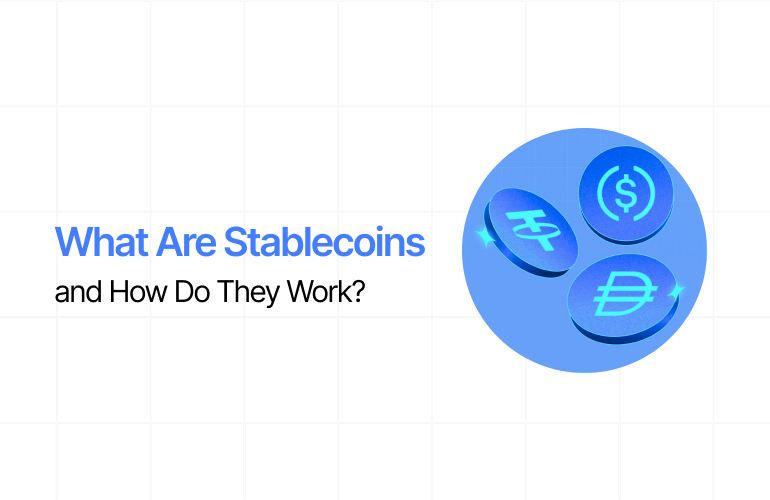
A stablecoin is a cryptocurrency pegged directly to a stable asset like the US dollar. Wild price variations typically plague traditional digital assets. This specific pegging design neutralises that exact volatility. They deliver the predictable valuations necessary for daily trading operations.
These tokens operate essentially as digital fiat. Should traders ask what are stablecoins, these assets function as virtual mirrors reflecting tangible fiat value. Investors hoard them to shield purchasing power whenever markets plunge. They supply immense liquidity across international exchanges. This deep liquidity prevents catastrophic slippage during massive sell-offs.
Advanced cryptography powers this entire infrastructure alongside distributed ledger systems. Every transaction secures a permanent spot on the blockchain ledger. Transparency of this immense magnitude fosters deep trust among participants.
Why Stablecoins Matter in the Crypto Ecosystem?
Practical financial applications demand absolute stability within the ecosystem. Traders require reliable media of exchange that retains value overnight. These tokens grant that exact reliability for participants navigating complex decentralised finance. Global value transfers happen rapidly and bypass traditional banking fees.
Remittance markets desperately need this exact technological leap forward. Sending capital across international borders traditionally involves incredibly frustrating delays. Digital fiat equivalents eliminate those severe friction points entirely. Small businesses now settle international vendor invoices using these exact blockchain instruments instead of waiting for legacy banking wires to clear.
How Do Stablecoins Work?
Maintaining price parity involves rigorous financial mechanisms and continuous monitoring. Issuers typically store physical currency reserves directly matching the circulating token supply. One actual fiat dollar sits in a verified bank account for every single active token. This one-to-one ratio establishes an unshakeable price floor for the asset.
Independent accounting firms audit these massive fiat reserves. They publish detailed transparency reports verifying the exact underlying asset backing. Such public verifications prevent devastating bank runs. Arbitrageurs actively enforce this crucial balance. Market makers monitor exchanges relentlessly to guarantee the token holds its intended valuation at all times.
They purchase tokens aggressively if prices dip marginally below one dollar in markets. This upward buying pressure instantly restores the vital peg. Self-executing smart contracts automate major stabilisation routines. They eradicate reliance on manual human intervention entirely. Such algorithmic efficiency dramatically lowers potential operational errors during highly chaotic trading sessions.
What are Considered Stable Coins?
Digital asset markets provide several robust options for maintaining price consistency. Tether and USD Coin stand out as the most prominent examples today. Unrivalled liquidity and global acceptance cement their absolute market dominance. Strict reserve audits ensure traders can seamlessly redeem tokens for actual physical currency upon direct request.
Investors frequently question what are stable coins based on beyond standard fiat. Certain tokens utilise physical commodities like gold as primary backing. PAX Gold and Tether Gold represent identical digital ownership of physical bullion. Investors secure direct exposure to precious metals without handling heavy physical bars or paying storage fees.
Alternative protocols employ over-collateralisation strategies leveraging various cryptocurrencies. Decentralised autonomous organisations manage these highly complex crypto-backed ecosystems. They require users to deposit significantly more collateral than the issued stable asset. This financial buffer absorbs sudden market shocks efficiently without compromising the core system’s integrity.
Stablecoins vs Traditional Cryptocurrencies
Standard digital assets suffer drastic valuation shifts daily. Bitcoin and Ethereum routinely fluctuate ten per cent within mere hours. Investors with an immense appetite for risk aggressively chase this market momentum. Every day, commercial purchases become practically impossible under such relentless uncertainty surrounding the token’s true purchasing power in the real world.
Consistent options differ fundamentally from volatile altcoins. Capital appreciation holds absolute zero importance in their design. Preserving baseline capital remains their solitary objective. While privacy coins mask transactional footprints, stable tokens champion unwavering price consistency and total market transparency for active retail users and participating financial institutions globally.
Intense speculation constantly grips traditional digital assets. Retail participants and institutional giants drive massive rallies followed by brutal corrections. Stable assets intentionally bypass this entire speculative frenzy. Their fundamental architecture prevents chaotic valuation swings. They function exclusively as boring yet incredibly essential financial utilities within sophisticated modern trading portfolios.
Key Uses of Stablecoins in Crypto Markets
Strategic deployment of these tokens takes multiple forms. They operate as capital preservation vehicles amidst sudden market crashes. Traders swiftly convert holdings into stable assets instead of executing cumbersome bank withdrawals. Capital stays primed for immediate redeployment once conditions stabilise. Grasping what are stable coins in crypto dramatically improves overall trading efficiency. They execute instantaneous cross-border settlements while entirely avoiding legacy banking networks.
They function as the dominant pairing asset within futures markets. High-leverage platforms rely completely on this foundational stability. Here is a list outlining the primary applications for these specific tokens.
- Capital preservation amidst severe market volatility
- Instantaneous cross-border settlements incur minimal fees
- Highly efficient trading pairs for perpetual futures
- Passive yield generation via decentralised lending protocols
- Frictionless integration supporting traditional corporate finance
Risks and Limitations of Stablecoins
Specific risks persist despite their reassuring nomenclature. For example:
- Users place immense trust in the centralised entities that manage the underlying fiat reserves.
- Token values collapse if issuers fail to maintain proper asset backing.
- Looming regulatory shifts constantly threaten broader global adoption.
- Algorithmic variants introduce significantly higher risk profiles.
- Software logic replaces physical asset backing to sustain the peg.
Considering the context given, the following table details the primary risk factors associated with these assets.
| Risk Factor | Description | Impact Level |
| Reserve Transparency | Opaque auditing regarding physical fiat backing | High |
| Regulatory Changes | Hostile government legislation restricting asset usage | High |
| Smart Contract Bugs | Critical vulnerabilities within the underlying blockchain code | Medium |
| De-pegging Events | Complete failure of the intended one-to-one valuation | High |
Frequently Ask Questions
1. What are stablecoins and how do they work?
Stablecoins are cryptocurrencies designed to maintain a stable value by being pegged to assets like the US dollar. They work by backing each token with reserves (such as fiat currency) or using algorithms and smart contracts to control supply and demand, ensuring price stability.
2. What is a stablecoin in crypto?
A stablecoin in crypto is a digital asset that mirrors the value of a stable asset like a fiat currency. It helps reduce volatility in the crypto market and is commonly used for trading, payments, and preserving value during market fluctuations.
3. What are considered stable coins?
Popular stablecoins include fiat-backed options like USDT (Tether) and USDC (USD Coin), commodity-backed tokens like PAX Gold, and crypto-backed or algorithmic stablecoins. These are designed to maintain consistent value across different market conditions.
4. Are stablecoins safe?
Stablecoins are generally considered safer than volatile cryptocurrencies, but they still carry risks. These include reserve transparency issues, regulatory changes, and potential de-pegging if the backing system fails. Their safety depends on how well they are managed and audited.
5. How do algorithmic stablecoins maintain price stability?
Algorithmic stablecoins maintain stability using smart contracts that automatically adjust supply based on market demand. When prices rise or fall, the system increases or decreases token supply to bring the value back to its target peg.

Sarvesh Pandey is a growth marketing professional at pi42, where he leads digital acquisition, partnerships, and user growth initiatives in India’s evolving crypto ecosystem. With experience across fintech, EdTech, and consumer internet brands, he shares insights on crypto adoption, trading trends, and performance-led growth strategies.
- Pi42 Snap Fiesta: Refer and Win an Instax Camera This October 📸
 Pi42 Snap Fiesta is an October referral contest that turns… Read more: Pi42 Snap Fiesta: Refer and Win an Instax Camera This October 📸
 - Pi42 BIG TAG: Refer and Win Nothing Buds This September
 Pi42 BIG TAG is a September referral contest that turns… Read more: Pi42 BIG TAG: Refer and Win Nothing Buds This September
 - Leverage in Crypto Trading: Meaning, Benefits & Risks
 Few tools attract as much attention, or cause as much… Read more: Leverage in Crypto Trading: Meaning, Benefits & Risks
 - Big Loot September: Trade & Win a BMW Bike 🏍️
 Big Loot September is Pi42’s biggest reward drop of the… Read more: Big Loot September: Trade & Win a BMW Bike 🏍️
 - Pi42 Week of Wins: Trade & Win a New iPhone This September
 Pi42 Week of Wins is a September contest where every… Read more: Pi42 Week of Wins: Trade & Win a New iPhone This September