
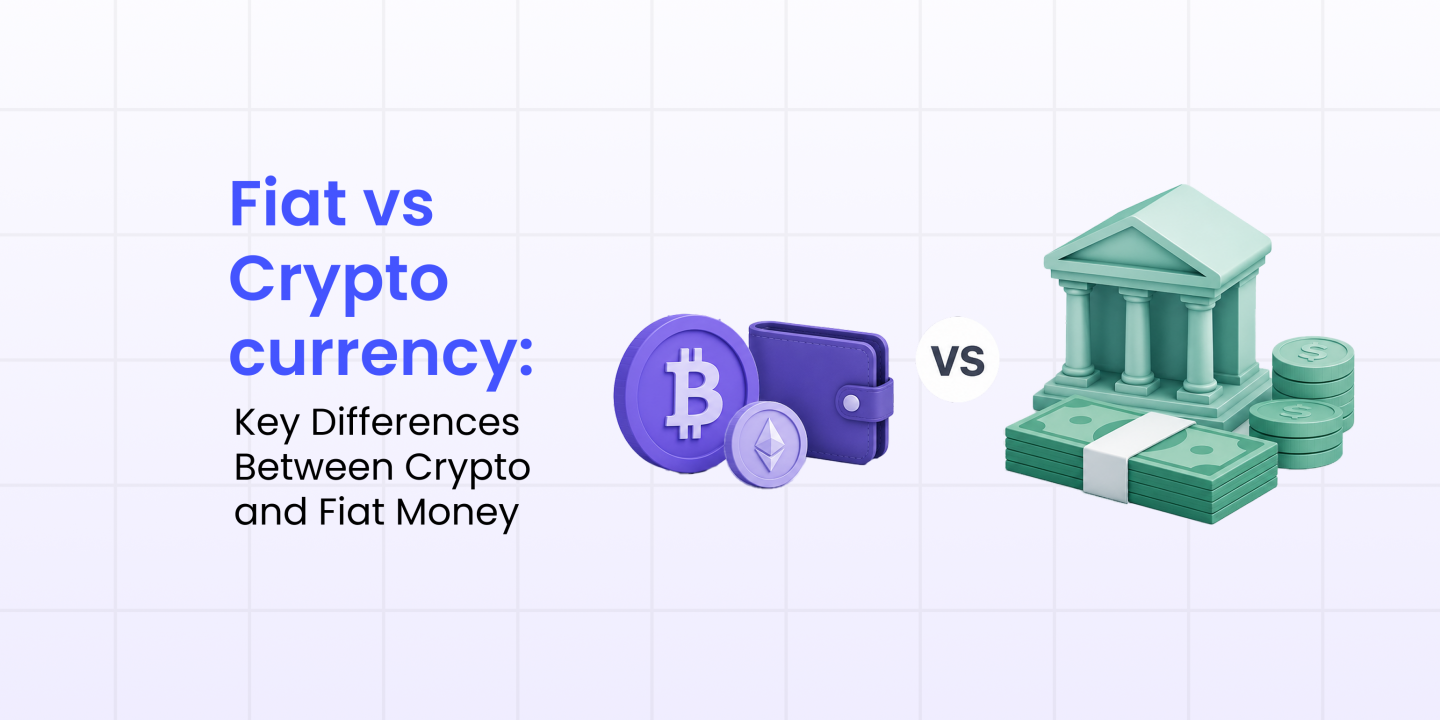
The financial world is changing incredibly fast, and that shift has sparked a real debate over fiat vs cryptocurrency. Traditional systems lean on government-issued money. Newer digital ones run on decentralised alternatives (systems that work without a central authority). Before you trade, it helps to understand both systems.
What is Fiat Currency?
Fiat currency is money that a government declares as legal tender. A central bank issues it and manages how much circulates. Its value comes from public trust and government backing, not from gold or silver.
Governments use fiat to run daily trade, collect taxes, and keep the economy steady. Central banks can also print more during a crisis. But this often fuels inflation (a drop in the purchasing power of money) over time.
What is Cryptocurrency?
If you’re wondering what is cryptocurrency, it is a digital asset secured by cryptography (the practice of secure communication) that runs on decentralised networks built on blockchain technology (a distributed ledger). The currency works without any central authority or bank.
It helps to weigh crypto currency vs digital currency (electronic forms of fiat or central bank digital currencies) here, because true cryptocurrencies stay decentralised. They allow direct peer-to-peer transactions, reach users worldwide, and cut the need for banks during cross-border transfers.
Difference Between Fiat and Cryptocurrency
Traders often ask about the difference between cryptocurrency and fiat currency. It comes down to control, issuance, and the tech underneath. Fiat depends on governments. Crypto depends on consensus mechanisms spread across global networks.
Wondering how is cryptocurrency different from fiat money? Two more things matter: transparency and supply. Most cryptocurrencies use a public, verifiable ledger and cap their total supply.
Three clear distinctions stand out:
- Fiat has no real supply limit, while many cryptos do.
- Central banks run fiat; community nodes run crypto networks.
- Fiat needs intermediaries; crypto moves directly between people.
Advantages and Limitations of Fiat Money vs Cryptocurrency
Each has its own strengths. Fiat offers price stability, daily acceptance, and consumer protection. But it loses ground to inflation, and cross-border transfers stay slow and pricey.
Now flip to cryptocurrency vs fiat currency. Crypto brings borderless transfers, transparency, and room to grow. The trade-off? Sharp volatility and rules that keep shifting. The crypto vs fiat currency picture rewards traders who can handle the swings.
Which is Better: Fiat Currency or Cryptocurrency?
The fiat currency vs cryptocurrency debate has no single winner. Fiat covers your daily costs. Crypto opens up dynamic trading. For Indian traders chasing wider exposure, platforms like Pi42 bridge the gap with India’s first crypto-INR perpetual futures (agreements to buy or sell an asset at a future date without an expiration).
With over 50,000 active users, Pi42 traders get up to 20 times leverage in Indian Rupees. We also skip the usual 1% TDS (Tax Deducted at Source) and the flat 30% VDA (Virtual Digital Asset) tax on spot trading. Pi42 lets traders offset losses too, which keeps things tax-efficient.
FAQ – Fiat vs Cryptocurrency
1. Can cryptocurrency replace fiat currency in the future?
While cryptocurrencies are gaining adoption, fiat currencies remain the primary medium of exchange globally. Both are likely to coexist for the foreseeable future.
2. Why do people invest in cryptocurrency instead of fiat money?
Many investors view cryptocurrencies as an opportunity for growth, portfolio diversification, and access to decentralized financial systems.
3. Is cryptocurrency more secure than fiat currency?
Cryptocurrencies use blockchain technology and cryptography for security, but users must protect their wallets and private keys. Fiat money benefits from government-backed banking protections.
4. Can I use cryptocurrency for everyday purchases?
Yes, some businesses accept cryptocurrency as payment. However, fiat currency remains more widely accepted for daily transactions in most countries.
5. What makes cryptocurrency prices more volatile than fiat currencies?
Cryptocurrency prices are influenced by market demand, investor sentiment, regulation, and adoption rates, leading to larger price fluctuations than traditional currencies.
6. Do I need a bank account to use cryptocurrency?
No. Users can store, send, and receive cryptocurrencies through digital wallets without requiring a traditional bank account.
7. Should beginners choose fiat currency or cryptocurrency?
The choice depends on individual financial goals and risk tolerance. Fiat offers stability and widespread acceptance, while cryptocurrency provides exposure to emerging digital asset markets.

Sarvesh Pandey is a growth marketing professional at pi42, where he leads digital acquisition, partnerships, and user growth initiatives in India’s evolving crypto ecosystem. With experience across fintech, EdTech, and consumer internet brands, he shares insights on crypto adoption, trading trends, and performance-led growth strategies.
- Pi42 Tick Together: Refer and Win an Armani Watch ⌚
 Pi42 Tick Together is a festive-season referral contest where your… Read more: Pi42 Tick Together: Refer and Win an Armani Watch ⌚
 - Pi42 Delisting: 74 USDT Futures Contracts on 29 October 2026
 As part of our periodic Market Quality Review, Pi42 is… Read more: Pi42 Delisting: 74 USDT Futures Contracts on 29 October 2026
 - Pi42 Head to Trade: Trade & Win the Season’s Biggest Prizes 🎮
 Pi42 Head to Trade is a festive-season trading contest where… Read more: Pi42 Head to Trade: Trade & Win the Season’s Biggest Prizes 🎮
 - Pi42 Snap Fiesta: Refer and Win an Instax Camera This October 📸
 Pi42 Snap Fiesta is an October referral contest that turns… Read more: Pi42 Snap Fiesta: Refer and Win an Instax Camera This October 📸
 - Pi42 BIG TAG: Refer and Win Nothing Buds This September
 Pi42 BIG TAG is a September referral contest that turns… Read more: Pi42 BIG TAG: Refer and Win Nothing Buds This September