
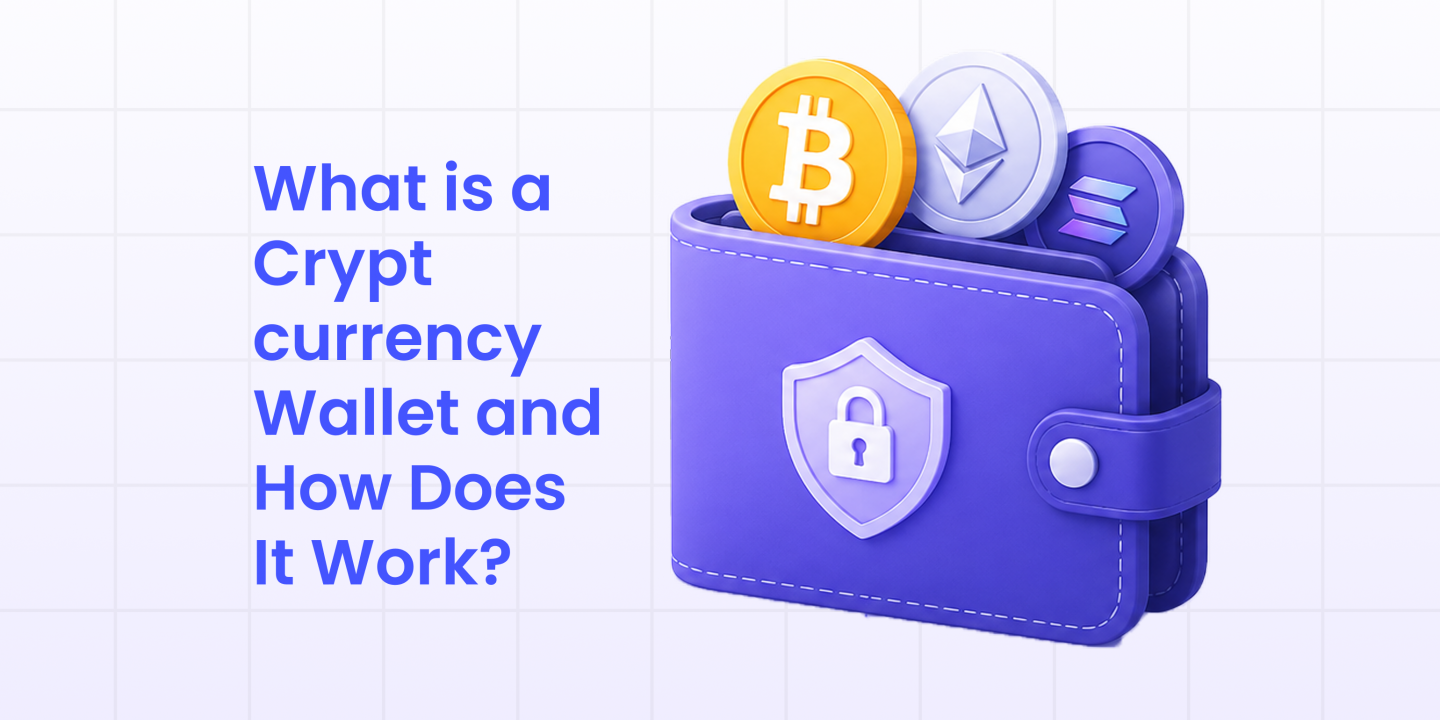
If you are stepping into digital finance, you have probably asked, what is a crypto wallet? It is a software or hardware tool for storing, managing, and using digital assets. The thing to grasp is that it holds no coins at all. What it actually stores are your private and public keys. The public key works like a bank account number that lets others send you funds, and the private key behaves like an ATM pin that lets you spend them.
People often ask what is a cryptocurrency wallet doing during a transaction. The wallet signs the transaction with your private key and broadcasts it to the network, and blockchain technology then verifies and records the movement. For anyone in crypto trading, this is what keeps assets protected. Whether you hold Bitcoin, Ether, Solana, MATIC, or Ripple, solid storage is your first line of defence against cyber threats.
Types of Crypto Wallets
Before choosing one, it helps to know what is cryptocurrency storage built around. Wallets fall into some clear types:
- Hot wallets stay online, covering mobile apps, desktop software, and browser extensions. They are quick for trading but more exposed to hacks, malware, or phishing.
- Cold wallets run offline, usually as hardware devices that look like a USB drive. They offer the strongest protection and suit long-term holders.
- Custodial wallets let a third party manage your keys, while non-custodial wallets leave you fully in charge of the recovery phrase.
How to Choose the Best Crypto Wallet?
So what are the best crypto wallets for you? It comes down to how you trade. Weigh these factors:
- Security: If you are asking what is the safest crypto wallet, hardware wallets keep keys off internet-connected devices.
- Frequency: Frequent traders value deep liquidity and fast execution more than cold storage.
- Control: Decide if you want someone else holding your keys or none of that risk.
- Tax: In India, spot assets draw a 30 per cent VDA tax and one per cent TDS, so it pays to optimise your tax liability.
That tax burden is why many Indian traders look at Pi42, an FIU-registered, crypto-INR perpetual futures platform. Because you trade futures rather than spot, it does not trigger the 30 per cent VDA tax or the one per cent TDS, and you can set off your losses. INR-margined trading also lets you use high-leverage futures on Bitcoin and Solana without converting currencies.
Best Crypto Wallets for Beginners and Security Tips
Wondering what is a good crypto wallet to begin with? Friendly mobile apps are an easy start. Whichever you choose, stick to a few habits:
- Write your seed phrase on paper and lock it away.
- Never share private keys or recovery passwords online.
- Switch on two-factor authentication everywhere.
- Check the recipient address twice before you confirm.
Habits matter as much as the wallet you pick. On Pi42, simple tools like stop-loss orders and steady risk management help with disciplined crypto trading rather than guesswork.
FAQ – What is a Cryptocurrency Wallet
1. What is a cryptocurrency wallet?
A cryptocurrency wallet is a tool that stores your public and private keys, allowing you to send, receive, and manage digital assets securely.
2. Does a crypto wallet actually store cryptocurrencies?
No. Crypto wallets do not store coins directly. They store the keys that give you access to your assets on the blockchain.
3. What is the difference between a hot wallet and a cold wallet?
Hot wallets stay connected to the internet and are convenient for trading, while cold wallets remain offline and offer stronger security for long-term storage.
4. What is a custodial wallet?
A custodial wallet is managed by a third party that holds your private keys. This makes access easier but gives you less control over your assets.
5. Which crypto wallet is best for beginners?
User-friendly mobile wallets are often the best choice for beginners as they are easy to set up and use for everyday transactions.
6. How can I keep my crypto wallet secure?
Store your seed phrase safely, enable two-factor authentication, never share private keys, and verify wallet addresses before sending funds.
7. What happens if I lose my wallet’s recovery phrase?
If you lose your recovery phrase and cannot access your wallet, you may permanently lose access to your crypto assets. Always keep a secure backup.

Sarvesh Pandey is a growth marketing professional at pi42, where he leads digital acquisition, partnerships, and user growth initiatives in India’s evolving crypto ecosystem. With experience across fintech, EdTech, and consumer internet brands, he shares insights on crypto adoption, trading trends, and performance-led growth strategies.
- Pi42 Tick Together: Refer and Win an Armani Watch ⌚
 Pi42 Tick Together is a festive-season referral contest where your… Read more: Pi42 Tick Together: Refer and Win an Armani Watch ⌚
 - Pi42 Delisting: 74 USDT Futures Contracts on 29 October 2026
 As part of our periodic Market Quality Review, Pi42 is… Read more: Pi42 Delisting: 74 USDT Futures Contracts on 29 October 2026
 - Pi42 Head to Trade: Trade & Win the Season’s Biggest Prizes 🎮
 Pi42 Head to Trade is a festive-season trading contest where… Read more: Pi42 Head to Trade: Trade & Win the Season’s Biggest Prizes 🎮
 - Pi42 Snap Fiesta: Refer and Win an Instax Camera This October 📸
 Pi42 Snap Fiesta is an October referral contest that turns… Read more: Pi42 Snap Fiesta: Refer and Win an Instax Camera This October 📸
 - Pi42 BIG TAG: Refer and Win Nothing Buds This September
 Pi42 BIG TAG is a September referral contest that turns… Read more: Pi42 BIG TAG: Refer and Win Nothing Buds This September