
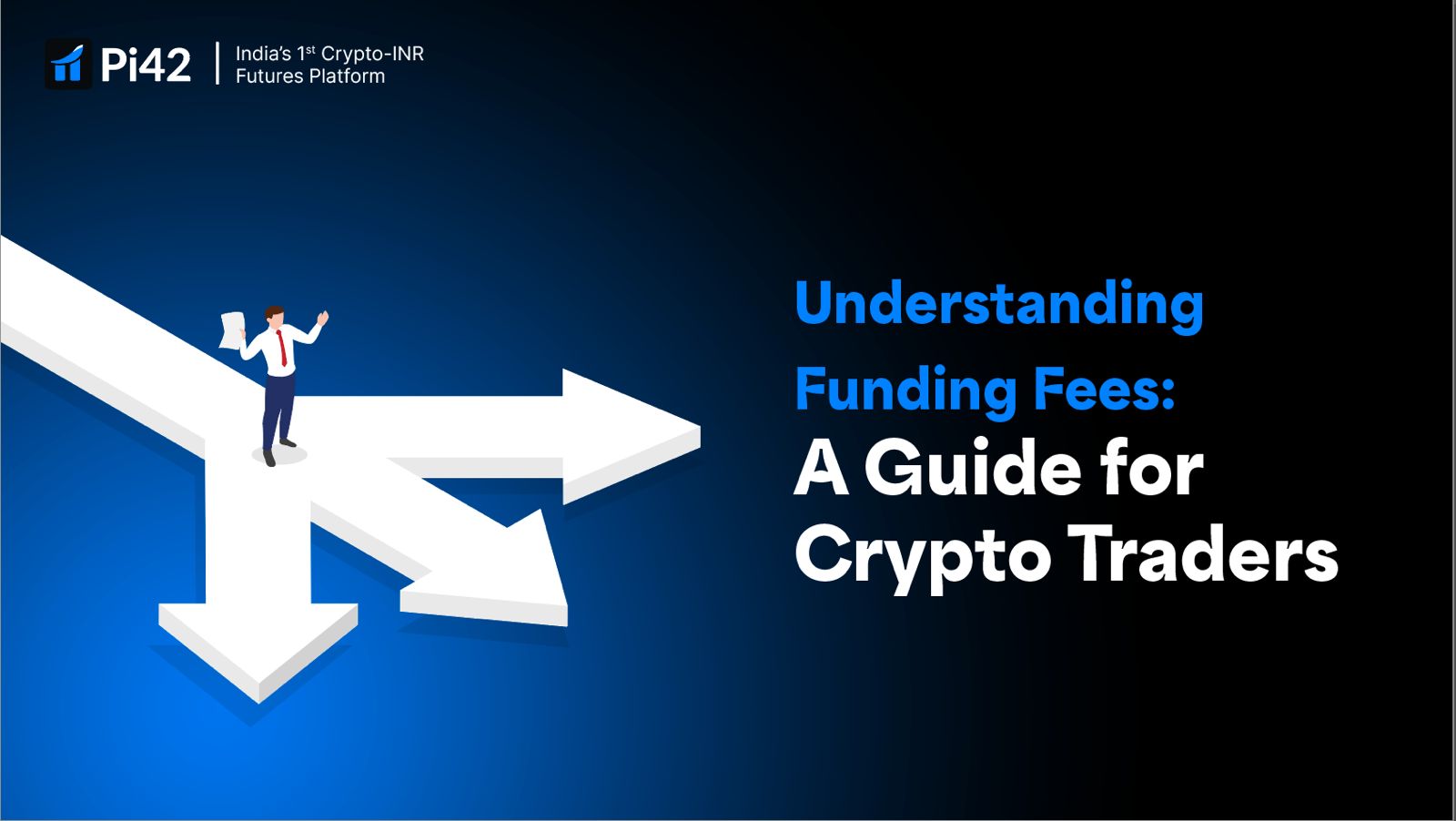
What is funding fee in crypto is a key concept every futures trader should understand. Funding fees play an important role in maintaining price balance in perpetual contracts, and knowing what is funding fee in crypto helps traders manage costs and identify opportunities in the market.
1 ) What are funding fees
Funding fees are periodic payments exchanged between buyers and sellers of perpetual futures contracts. These payments ensure that the contract price stays close to the underlying asset price.
In simple terms, what is funding fee refers to the cost or reward traders receive based on their position in the market.
These are commonly known as crypto funding fees, and they apply only to perpetual futures contracts.
2) How often are funding fees exchanged
The frequency of funding fee exchange depends on the specific trading pair.
For every 8 hours it is triggered at 5 30 AM 1 30 PM and 9 30 PM
For every 4 hours it occurs multiple times throughout the day depending on the exchange
Traders need to be aware of funding timings since fees are applied only if positions are open at that moment.
3) How are funding fees calculated
The funding amount is calculated using a combination of position size and funding rate.
Nominal Value of Position
This is calculated by multiplying the mark price with the contract size
Funding Rate
The funding rate includes interest rate and premium or discount components
This explains what is funding rates, which is the mechanism used to balance perpetual contract prices with spot prices.
The what is funding rates in crypto concept is essential because it determines whether traders pay or receive funding fees.
4) When are you liable to pay funding fees
You are only required to pay or receive funding fees if you hold an open position at the funding time.
If you close your position before the funding interval, you will not incur any fees.
This is how funding rates in crypto directly impact active traders.
5) How can you earn or pay funding fees
Funding fees depend on whether the funding rate is positive or negative.
Positive funding rate
When the funding rate is positive, long positions pay short positions.
This happens when the contract price is higher than the spot price, indicating bullish sentiment.
If you hold a long position during this time, you will pay funding fees.
Negative funding rate
When the funding rate is negative, short positions pay long positions.
This occurs when the contract price is lower than the spot price, indicating bearish sentiment.
If you hold a short position, you may earn funding fees.
In both cases, the payment depends on position type and funding rate, not just price movement.
Key Insight
The funding rate determines whether you pay or receive fees. Holding a position at the funding time is the only condition for being charged or rewarded.
Conclusion
Understanding what is funding fee in crypto is essential for anyone trading perpetual futures. These fees are not just costs, they also reflect market sentiment and positioning.
By tracking crypto funding fees and understanding funding rates in crypto, traders can manage risk better, optimize positions, and even generate additional returns.
FAQs
What is funding fee in crypto trading
What is funding fee in crypto refers to periodic payments exchanged between long and short traders in perpetual futures contracts.
What are funding fees in crypto
What are funding fees are payments that help keep futures prices aligned with spot prices.
What is funding rates in crypto
What is funding rates in crypto refers to the rate used to determine whether traders pay or receive funding fees.
How do crypto funding fees work
Crypto funding fees work by transferring value between long and short positions depending on market conditions.
Can I avoid funding rates in crypto
You can avoid funding rates in crypto by closing your position before the funding time.

Sarvesh Pandey is a growth marketing professional at pi42, where he leads digital acquisition, partnerships, and user growth initiatives in India’s evolving crypto ecosystem. With experience across fintech, EdTech, and consumer internet brands, he shares insights on crypto adoption, trading trends, and performance-led growth strategies.
- Pi42 Delisting: 74 USDT Futures Contracts on 29 October 2026
 As part of our periodic Market Quality Review, Pi42 is… Read more: Pi42 Delisting: 74 USDT Futures Contracts on 29 October 2026
 - Pi42 Head to Trade: Trade & Win the Season’s Biggest Prizes 🎮
 Pi42 Head to Trade is a festive-season trading contest where… Read more: Pi42 Head to Trade: Trade & Win the Season’s Biggest Prizes 🎮
 - Pi42 Snap Fiesta: Refer and Win an Instax Camera This October 📸
 Pi42 Snap Fiesta is an October referral contest that turns… Read more: Pi42 Snap Fiesta: Refer and Win an Instax Camera This October 📸
 - Pi42 BIG TAG: Refer and Win Nothing Buds This September
 Pi42 BIG TAG is a September referral contest that turns… Read more: Pi42 BIG TAG: Refer and Win Nothing Buds This September
 - Leverage in Crypto Trading: Meaning, Benefits & Risks
 Few tools attract as much attention, or cause as much… Read more: Leverage in Crypto Trading: Meaning, Benefits & Risks